
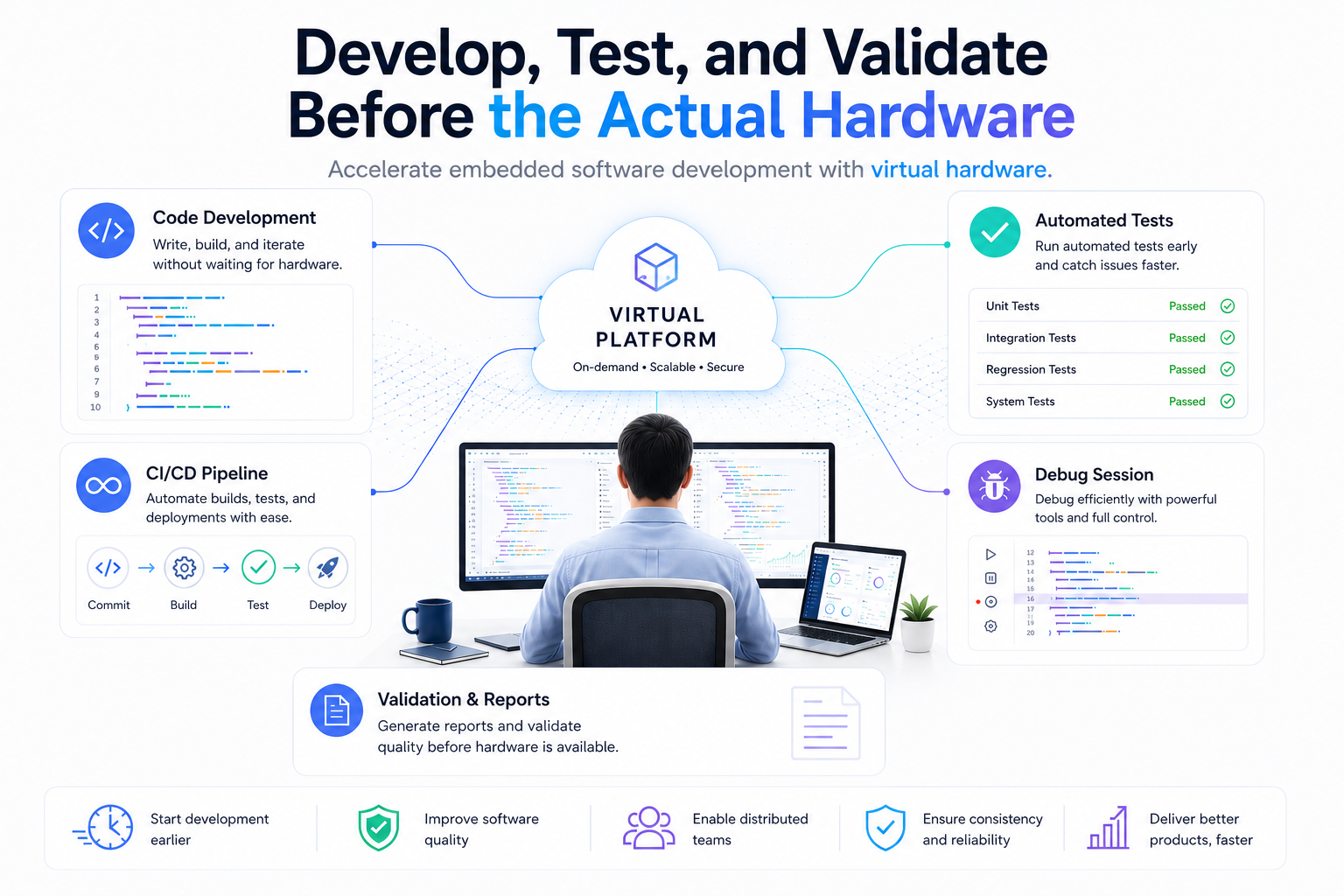
Virtual Hardware for Modern Embedded Software Workflows
Embedded Software development has traditionally relied on access to physical hardware. While development boards and prototype remain essential, they can also create bottlenecks when hardware availability is limited, teams are distributed across locations, or multiple engineers need access to same platform. These challenges can slow development, testing, and debugging activities, particularly during the early stages of project when rapid iteration is critical.
Virtual hardware platforms are helping engineering teams overcome many of these challenges by providing software-accessible representations of physical devices. Solutions such as Arm Virtual Hardware (AVH) allow developers to begin software development, testing, and validation before physical hardware is available. By enabling scalable, cloud-based execution environments, virtual platforms support modern development practices such as continuous integration, automated testing, and remote collaboration while reducing dependence on limited hardware resources.
Corellium builds on the concept of virtual hardware by providing Arm-based virtual platforms that support embedded software development, testing, debugging, and validation workflows. By giving developers on-demand access to virtual target platforms, teams can begin software development earlier and avoid delays caused by limited hardware availability. Virtual platforms can also simplify testing by making it easier to run repeatable test scenarios, perform regression testing, and integrate automated validation into CI/CD pipelines. Developers can currently explore supported platforms including Raspberry Pi 4, NXP i.MX 93, NXP i.MX 8M, and the STM32U5 IoT Discovery Kit, providing a practical way to evaluate virtual hardware workflows on widely used Arm-based devices. This flexibility allows development and testing activities to scale more easily while helping teams maintain consistency across projects and locations.

As embedded systems continue to grow in complexity, development teams are looking for ways to improve efficiency without compromising quality. Virtual hardware is increasingly becoming a valuable complement to physical devices, helping teams start software development sooner, test more effectively, and support distributed engineering workflows. Platforms such as Corellium make it possible to reduce dependence on hardware availability, allowing engineers to spend more time developing and validating software and less time waiting for access to target platforms.

Published by Hrutik Champaneri | Joral Technologies
For more information about Corellium and virtual hardware solutions, contact hrutik.champaneri@joraltechnologies.com
Learn how virtual hardware can accelerate embedded software development in our on-demand webinar:
RELATED NEWS
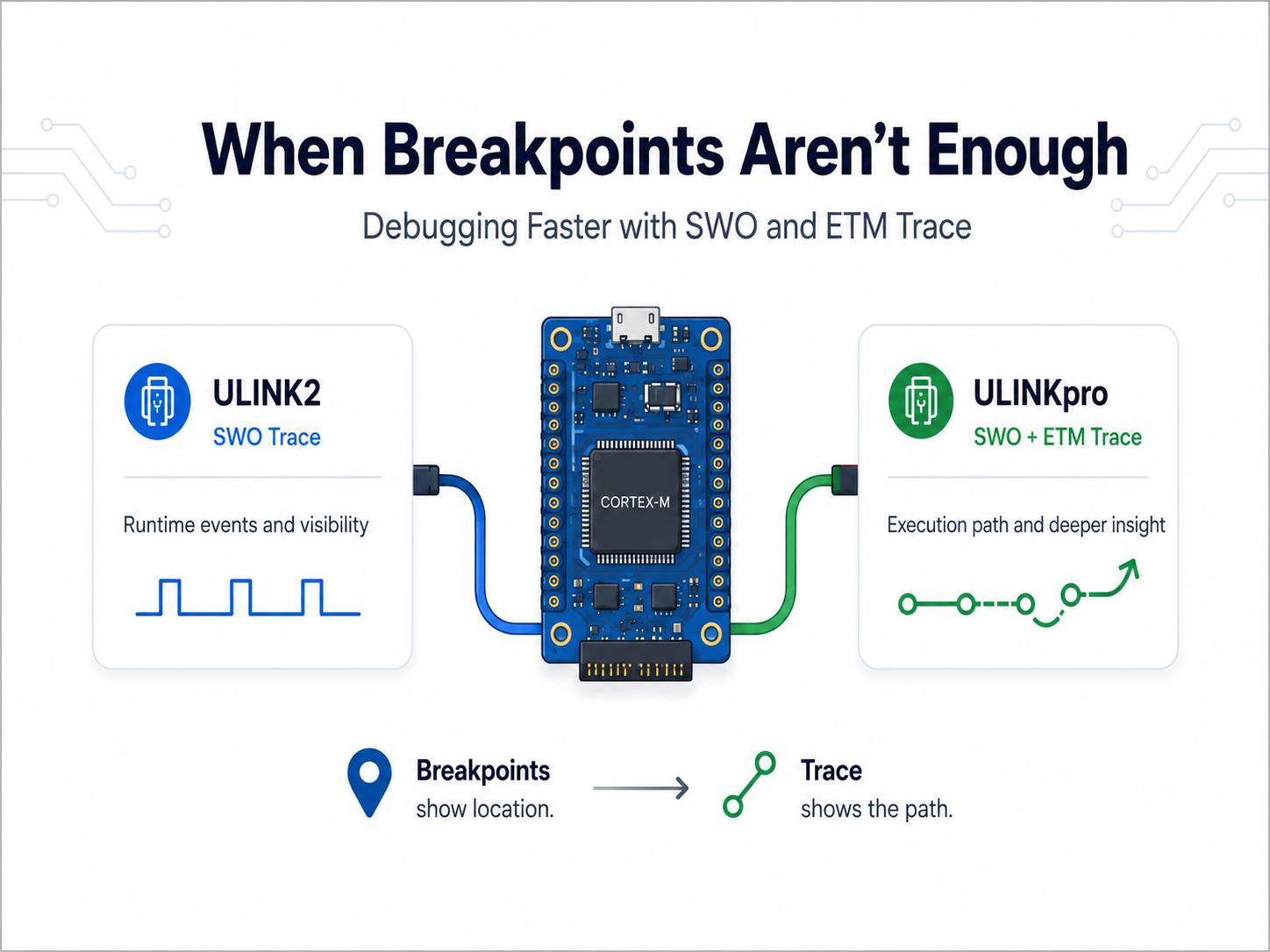
When Breakpoints Aren’t Enough: Debugging Faster with ULINKpro Trace
Most embedded developers are familiar with the usual debugging cycle: set a breakpoint, stop the processor, inspect the problem, make a change, and try again. That works well until the problem [...]
Read more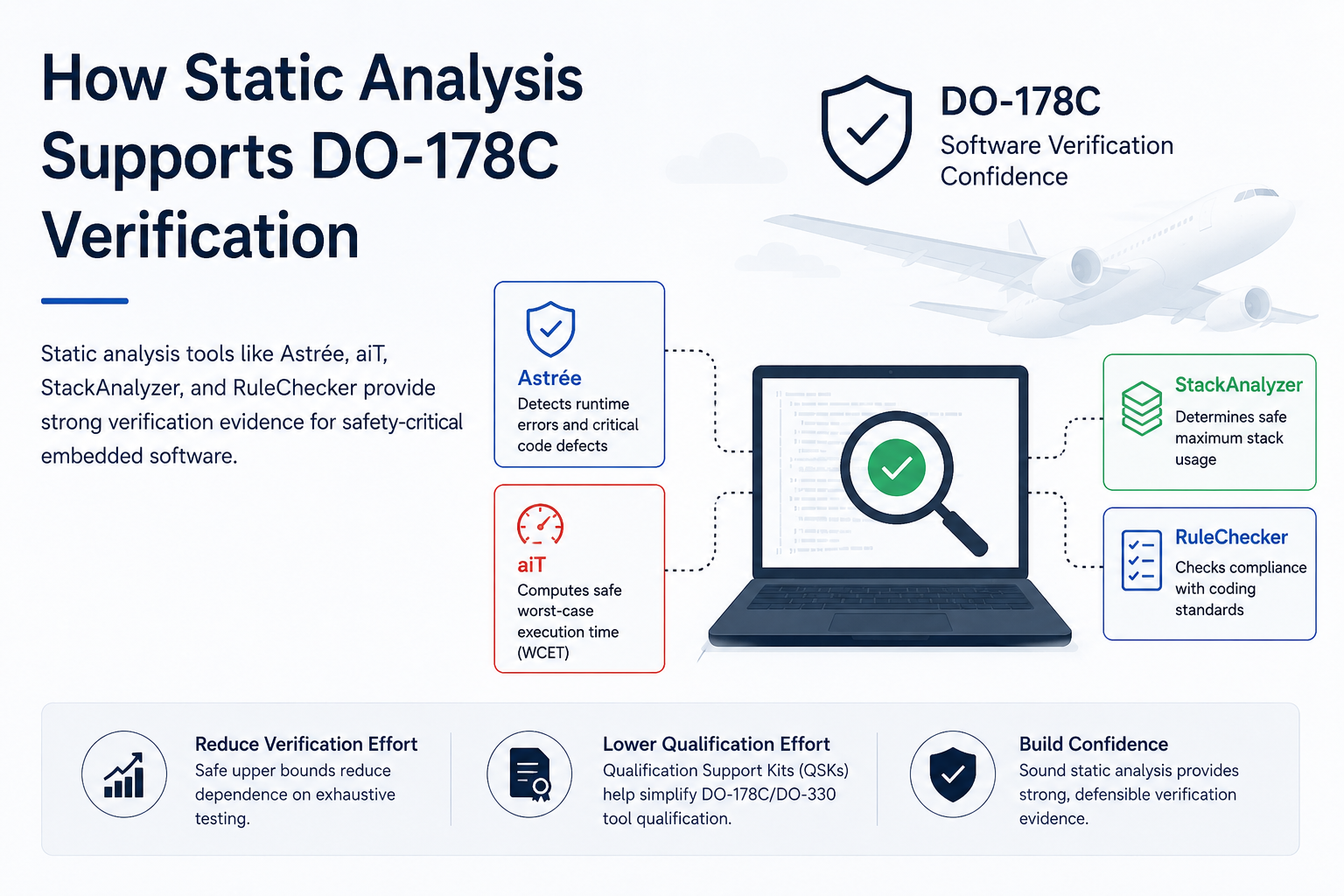
How Static Analysis Supports DO-178C Verification
Developing software for airborne systems requires strong verification evidence, especially for higher-criticality applications. DO-178C defines objectives for airborne software development and ve[...]
Read more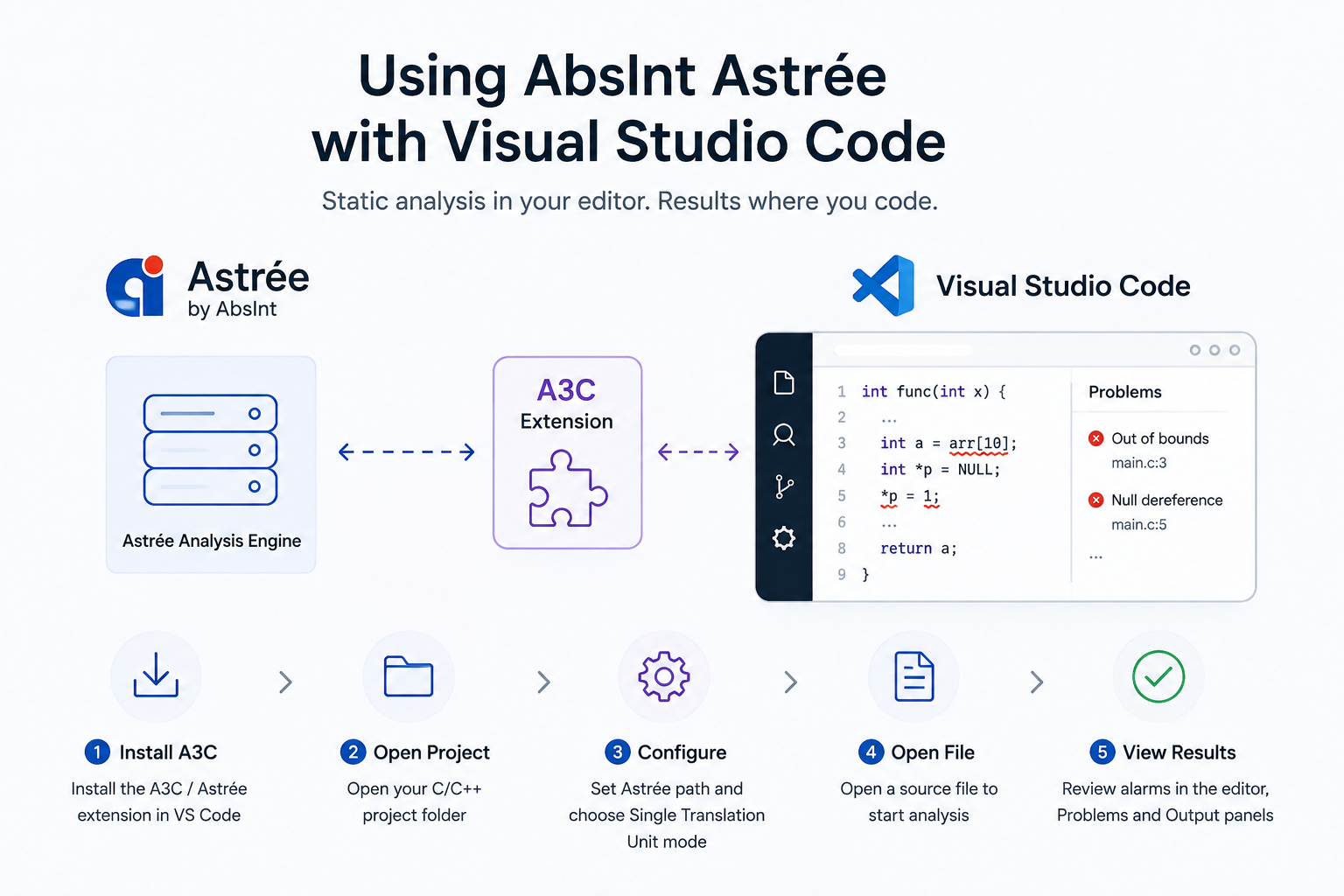
Installing and Using AbsInt Astrée with Visual Studio Code
AbsInt Astrée can be integrated with Visual Studio Code using the A3C extension, allowing developers to run Astrée analysis and review detected alarms directly within the editor. Install and Con[...]
Read more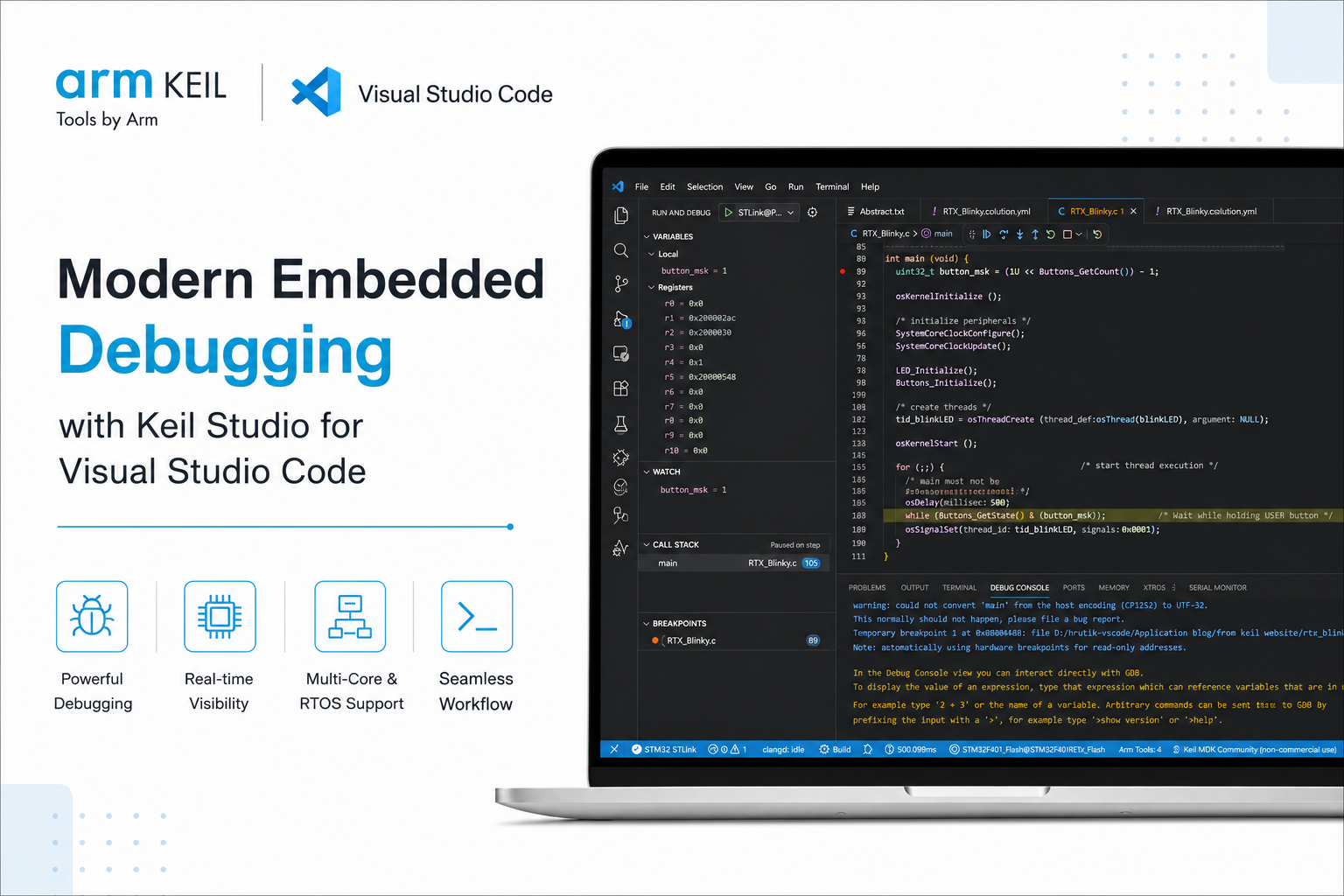
Modern Embedded Debugging with Keil Studio for Visual Studio Code
Visual Studio Code has rapidly become a preferred development environment for embedded software, and many engineering teams are now looking beyond editing and building firmware. The Arm Keil Stud[...]
Read more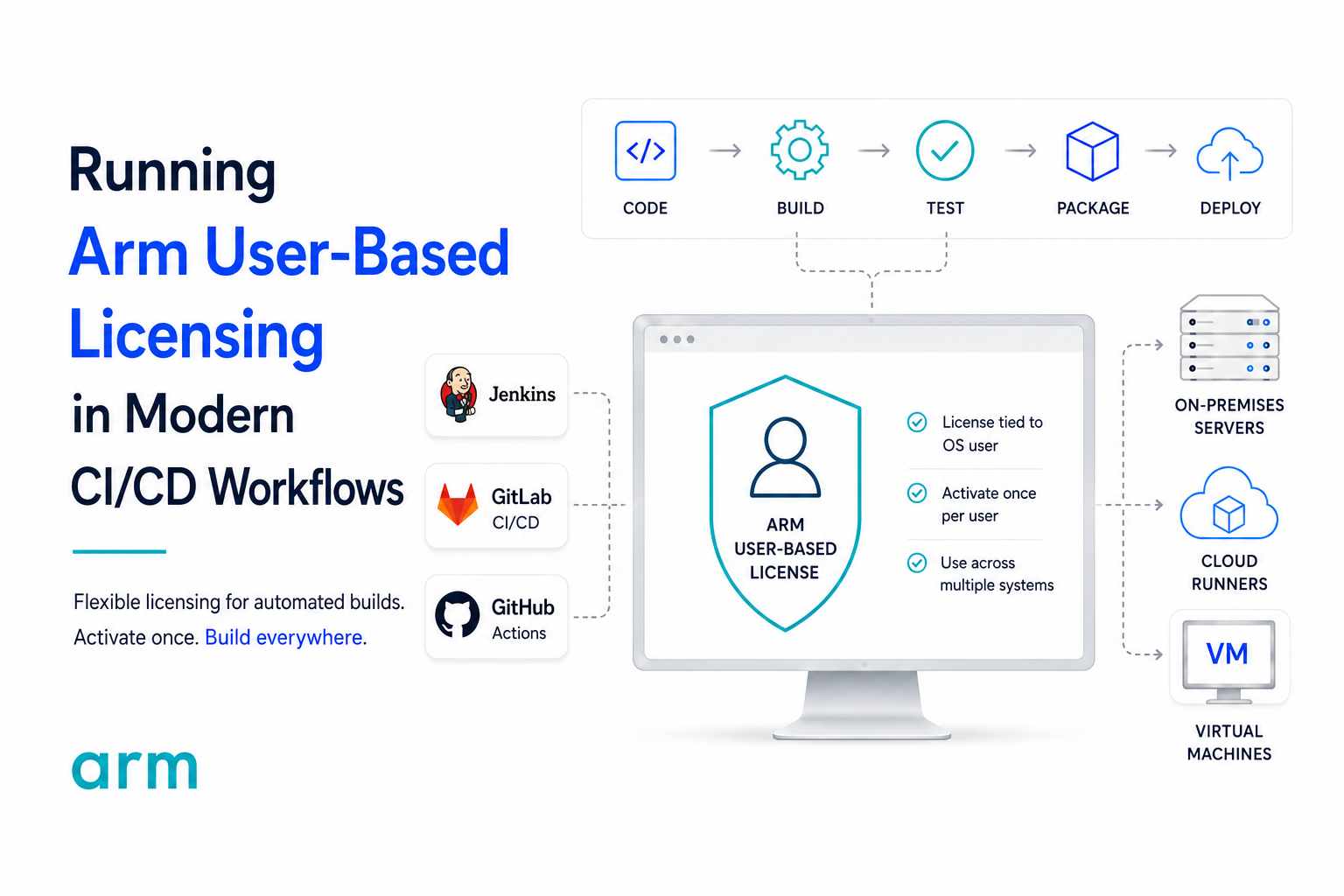
Running Arm User-Based Licensing in Modern CI/CD Workflows
Modern embedded software development no longer ends at a successful local build. Firmware is now continuously compiled, tested, analyzed, and packaged through automated pipelines running on Jenki[...]
Read more
EMBEDDED IS EVERYWHERE

PRODUCTS
Manufacturers
Resource center