

ARCHITECTURE OF TRUST: STRENGTHENING SECURITY IN MODERN CORTEX-M SYSTEMS
As embedded devices continue to expand into connected and safety-critical applications, security has become a fundamental design requirement rather than an optional feature. From industrial controllers and medical devices to automotive and IoT systems, developers must address increasingly sophisticated threats while maintaining performance and reliability.
Modern Arm Cortex-M processors have evolved significantly to meet these challenges. While earlier Cortex-M architectures provided strong performance and low-power operation, newer generations introduce hardware enforced security features designed to protect software, data, and system resources from both accidental faults and malicious attacks.
One of the most significant advancements is TrustZone for Arm Cortex-M, which enables the separation of applications into Secure and Non-Secure environments. By isolating sensitive assets such as cryptographic keys, authentication services, and security-critical firmware, TrustZone helps reduce the attack surface and limits the impact of compromised software components.
Recent Cortex-M architectures further strengthen security through features such as Stack Limit Registers, PAN (Privileged Access Never), PXN (Privileged Execute Never), Pointer Authentication and Branch Target Identification (PACBTI), enhanced Memory Protection Unit (MPU) capabilities, and secure gateway mechanisms. Together, these technologies help mitigate common attack vectors including stack overflows, code injection, privilege escalation, control-flow hijacking, and cross-domain attacks.
These hardware assisted protections are particularly valuable as embedded systems become increasingly connected and exposed to external threats. Security mechanisms that were once implemented primarily in software can now be enforced directly by the processor, improving both robustness and system resilience.
As cybersecurity requirements continue to evolve, modern Cortex-M security features provide developers with practical tools to implement a defense in depth strategy. By combining hardware isolation, memory protection, privilege controls, and control-flow integrity mechanisms, organizations can build more secure and trustworthy embedded systems for the next generation of connected devices.
To learn more about the security features discussed in this article, watch the full webinar here.
RELATED NEWS
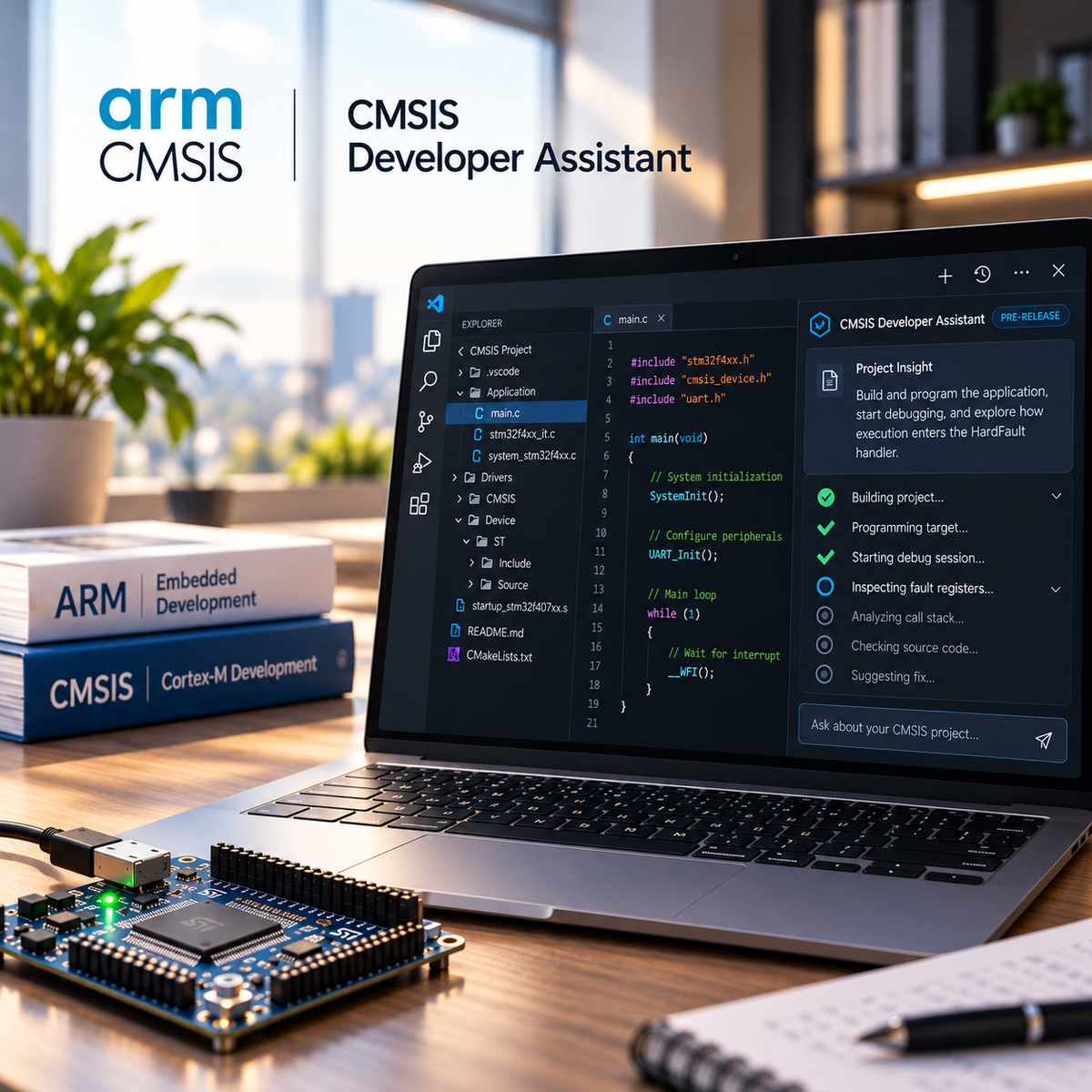
Beyond Code Generation: AI-Assisted Embedded Development with Arm CMSIS
AI coding assistants can generate a UART driver in seconds. But when the output is garbled or an application unexpectedly enters a HardFault handler, the problem may not be obvious from the sourc[...]
Read more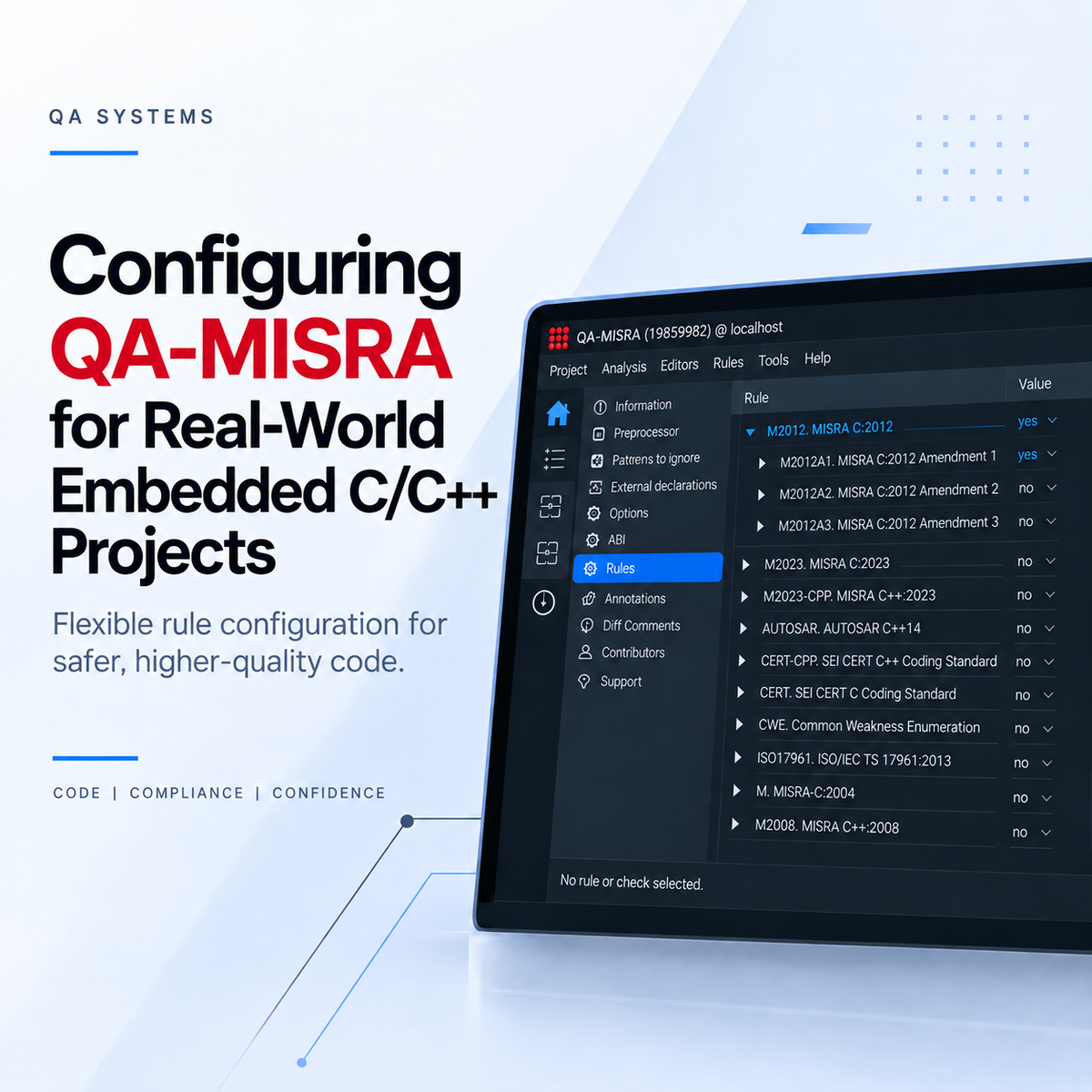
Configuring QA-MISRA for Real-World Embedded C/C++ Projects
Getting QA-MISRA running is only the first part of the setup. For an actual embedded project, you will usually need to decide which coding rules should be checked, how compiler-specific code sho[...]
Read more
Setting Up a QA-MISRA Evaluation License and VS Code Extension
The following steps explain how to activate a QA-MISRA evaluation license, configure the local server, install the QA-MISRA extension in Visual Studio Code, and run an example analysis. 1. Requ[...]
Read more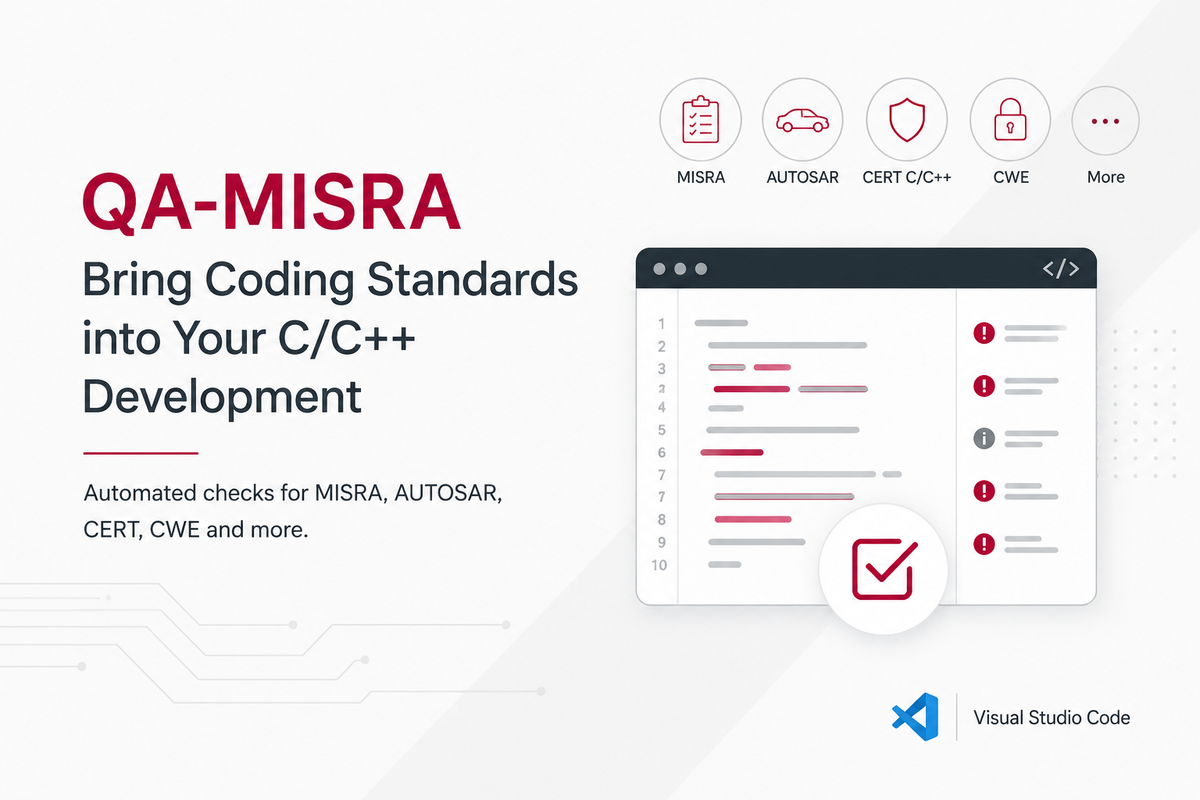
Using QA-MISRA to Bring Coding Standards into C/C++ Development
In embedded and safety-critical software, coding standards help reduce risky language behaviour, improve consistency, and make software easier to review and verify. This is especially important i[...]
Read more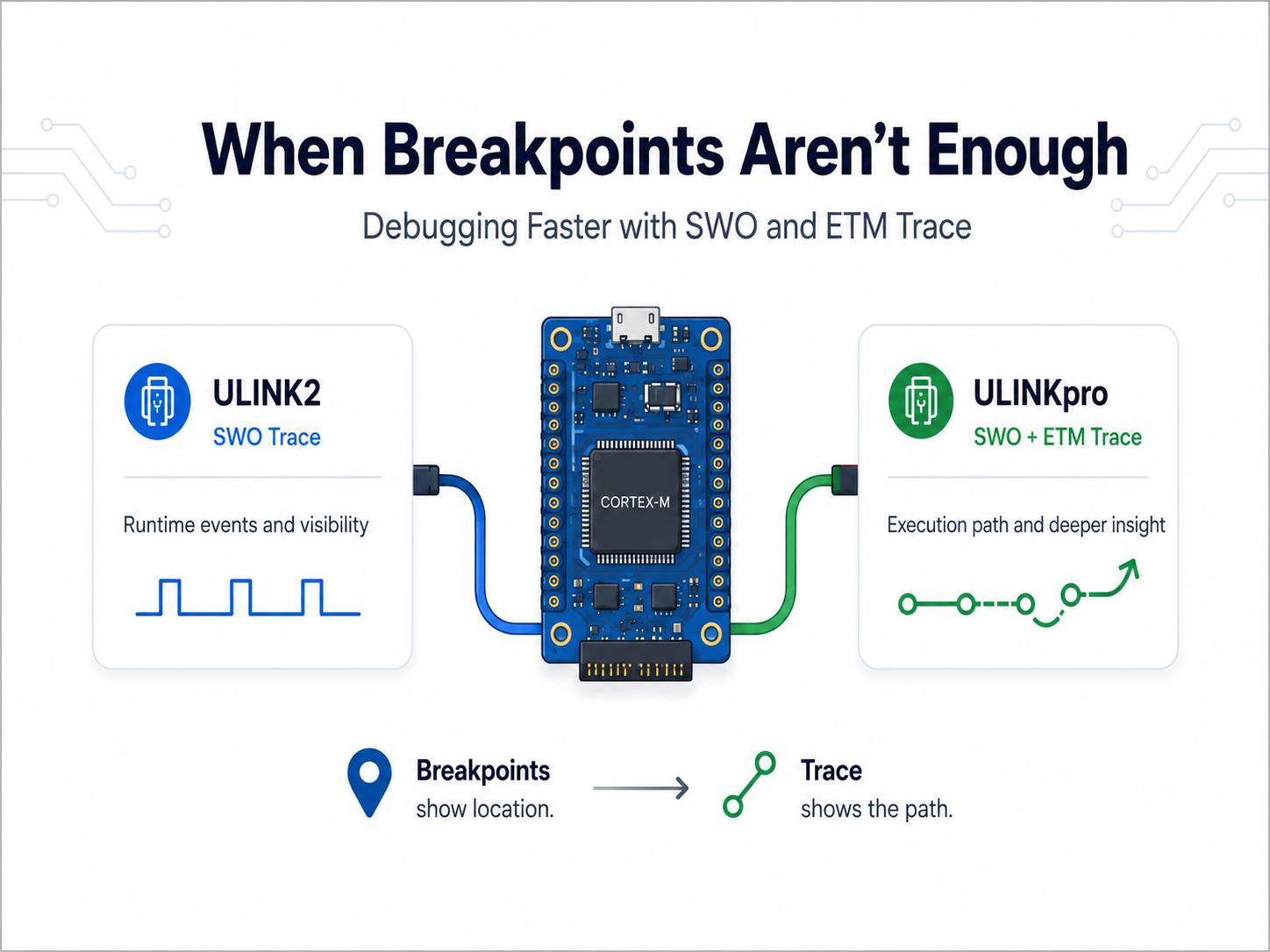
When Breakpoints Aren’t Enough: Debugging Faster with ULINKpro Trace
Most embedded developers are familiar with the usual debugging cycle: set a breakpoint, stop the processor, inspect the problem, make a change, and try again. That works well until the problem [...]
Read more
EMBEDDED IS EVERYWHERE

PRODUCTS
Manufacturers
Resource center