

Cantata 26.04: Bringing AI-Assisted Testing into the Verification Workflow
The new release introduces new AI-assisted testing capabilities, enhanced automation, and greater flexibility for teams developing safety-critical C and C++ software.
Highlights include the first generation of in-GUI AI test case generation tools, expanded support for agentic AI frameworks, and new open JSON interfaces for test definition and result export. The release also delivers enhanced Visual Studio Code support, expanded command-line automation, and further improvements to coverage analysis, AutoTest, and Cantata Hybrid
Whether you're looking to accelerate test creation, strengthen automation, or improve traceability, Cantata 26.04 helps teams increase productivity while maintaining the compliance and verification evidence required for high-integrity software.
Our document "What's New in Cantata 26.04?" provides an outline of the new features with graphical representations.
A complete list of all new features can be found in the "Cantata 26.04 Release Notes"
RELATED NEWS
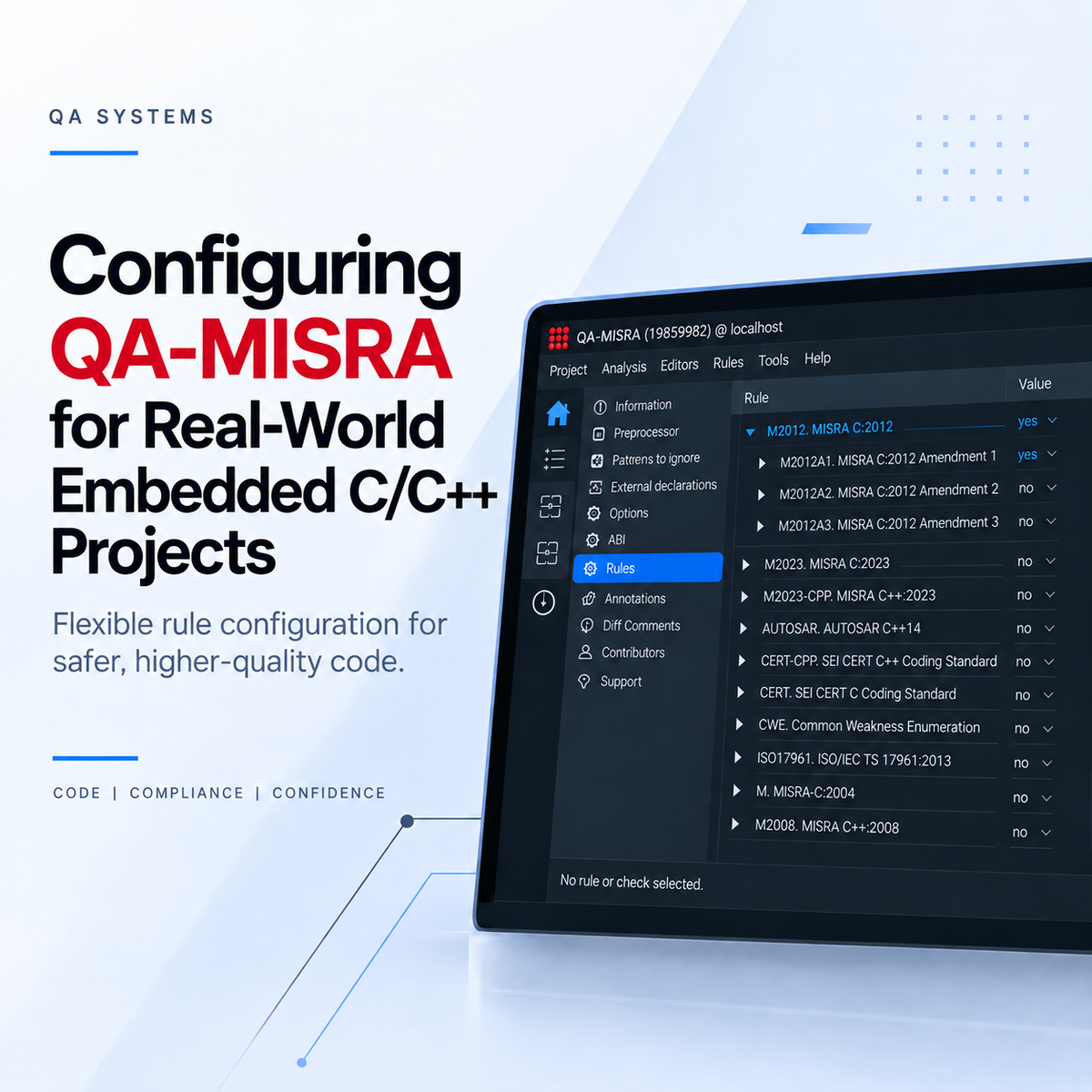
Configuring QA-MISRA for Real-World Embedded C/C++ Projects
Getting QA-MISRA running is only the first part of the setup. For an actual embedded project, you will usually need to decide which coding rules should be checked, how compiler-specific code sho[...]
Read more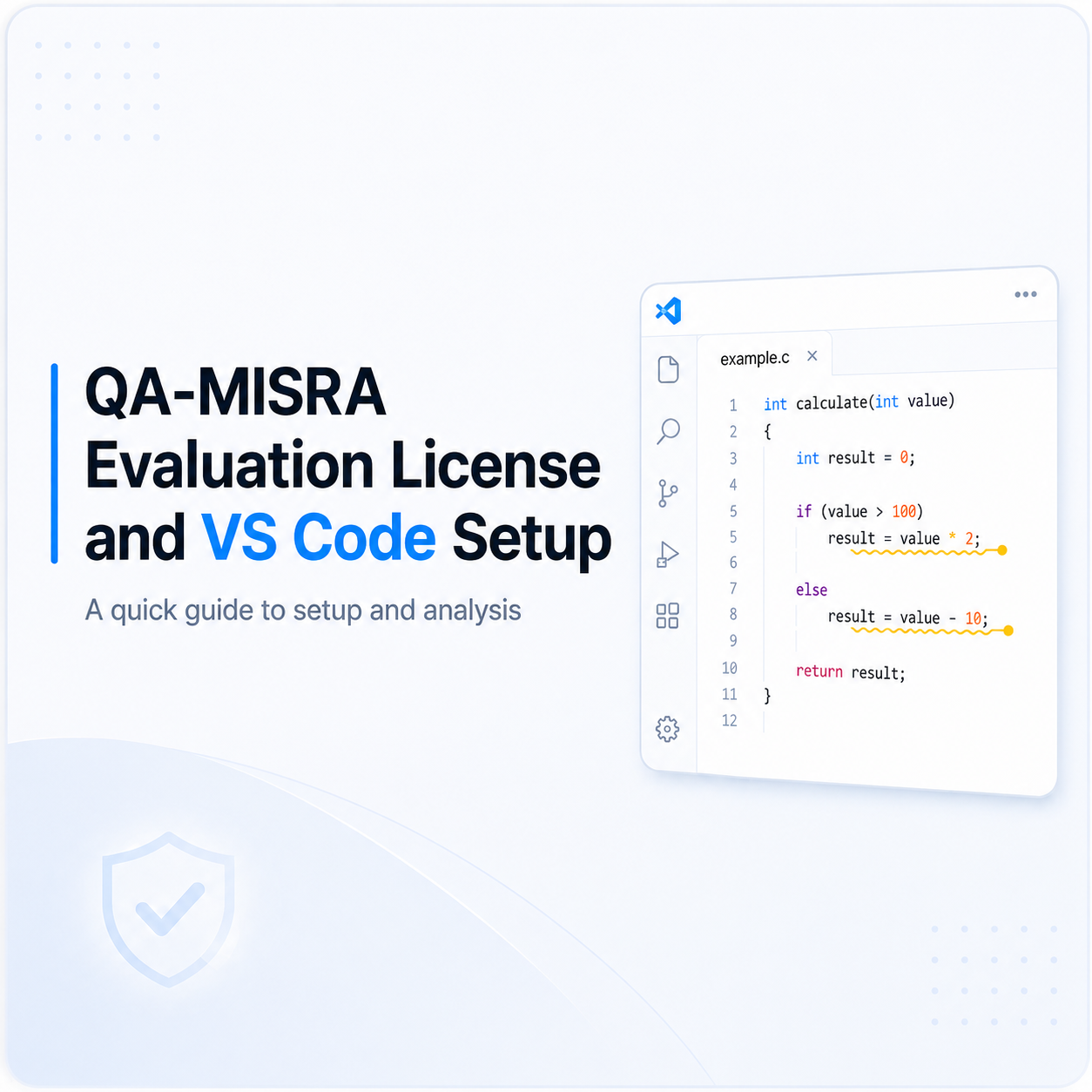
Setting Up a QA-MISRA Evaluation License and VS Code Extension
The following steps explain how to activate a QA-MISRA evaluation license, configure the local server, install the QA-MISRA extension in Visual Studio Code, and run an example analysis. 1. Requ[...]
Read more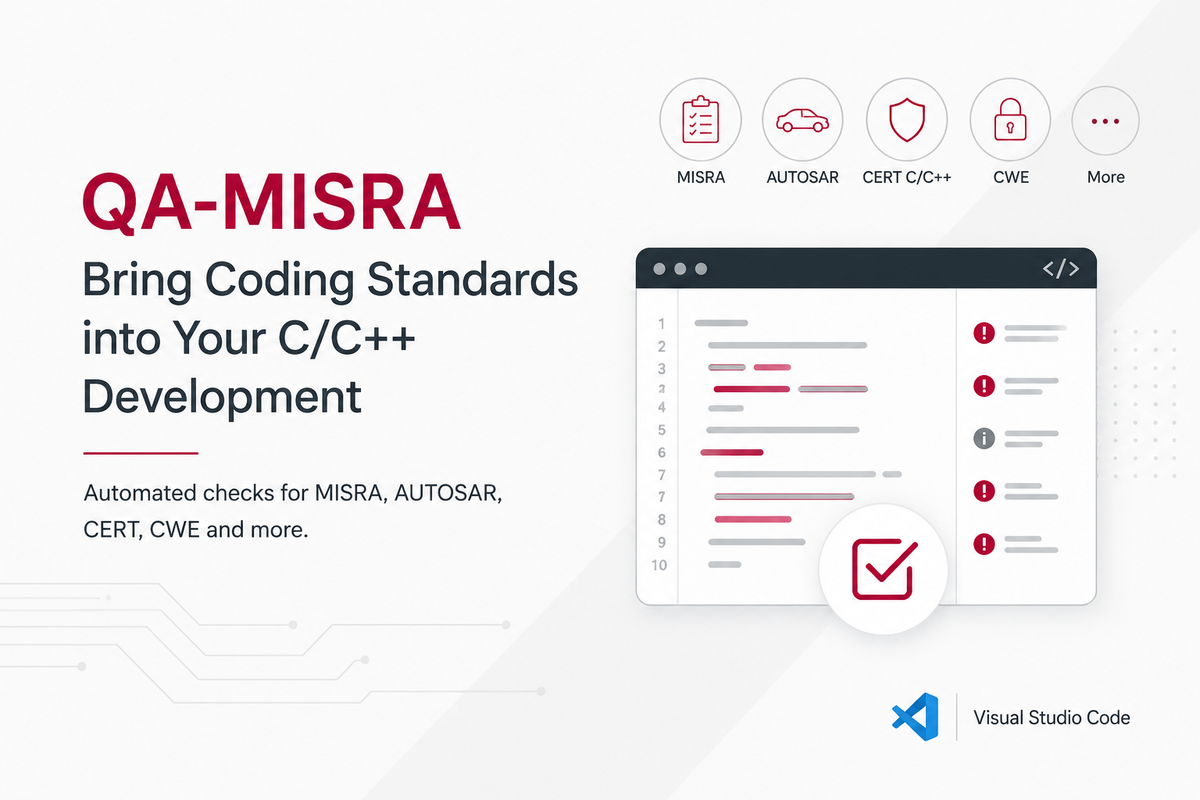
Using QA-MISRA to Bring Coding Standards into C/C++ Development
In embedded and safety-critical software, coding standards help reduce risky language behaviour, improve consistency, and make software easier to review and verify. This is especially important i[...]
Read more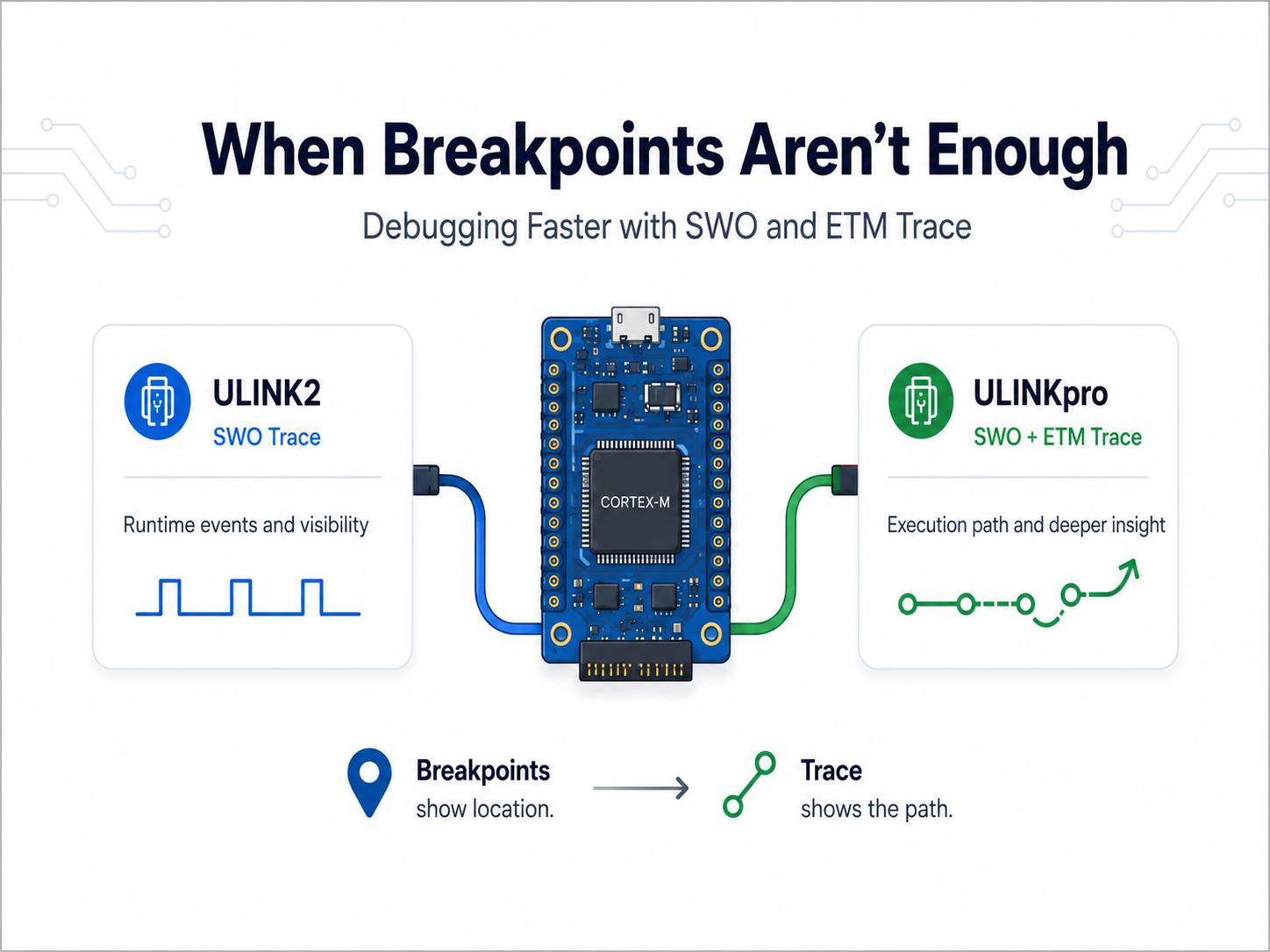
When Breakpoints Aren’t Enough: Debugging Faster with ULINKpro Trace
Most embedded developers are familiar with the usual debugging cycle: set a breakpoint, stop the processor, inspect the problem, make a change, and try again. That works well until the problem [...]
Read more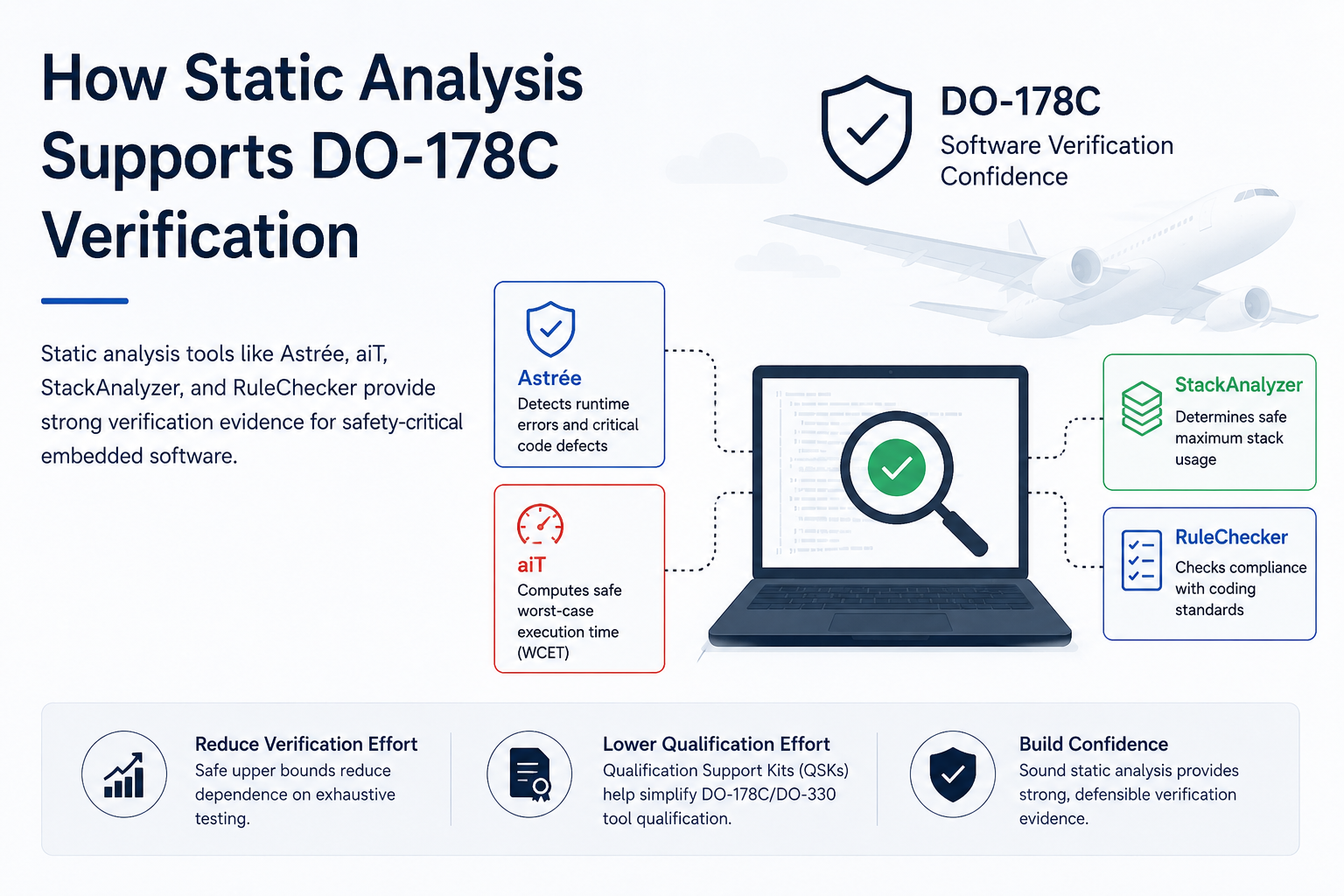
How Static Analysis Supports DO-178C Verification
Developing software for airborne systems requires strong verification evidence, especially for higher-criticality applications. DO-178C defines objectives for airborne software development and ve[...]
Read more
EMBEDDED IS EVERYWHERE

PRODUCTS
Manufacturers
Resource center