
VS Code and the Modern Embedded Workflow
Visual Studio Code has become a preferred development environment for many embedded software teams thanks to its flexibility, lightweight design, and extensive extension ecosystem. However, as embedded projects grow in complexity, writing code is only part of the challenge. Teams must also ensure software quality, compliance, test coverage, and verification while still meeting aggressive release schedules.
The challenge is that many of these activities are still performed later in the development lifecycle, where defects become significantly more expensive to resolve. Industry studies have shown that software defects discovered during integration or system testing can cost up to 10x more to fix than those identified during development. For this reason, many organizations are shifting verification activities earlier in the software lifecycle to reduce project risk, improve quality, and avoid costly rework.
Rather than forcing developers to abandon their preferred development environment, a modern VS Code-based workflow allows quality and verification activities to be integrated directly into day-to-day development. Developers can use Keil MDK to build and debug Arm Cortex-M applications while continuing to work within a familiar VS Code environment. Powered by Arm Compiler and the CMSIS ecosystem, Keil MDK provides optimized code generation, comprehensive device support, and advanced debugging capabilities specifically designed for Arm-based systems. This enables teams to accelerate development while building on a trusted toolchain widely used across safety, industrial, automotive, and IoT applications.
Coding standards compliance is often another source of engineering effort, particularly for projects operating under safety, security, or regulatory requirements. QA MISRA helps identify coding standard violations as code is written, allowing issues to be corrected before formal reviews begin. Organizations that introduce coding standards verification earlier in development often report reduced review effort, improved code consistency, and fewer compliance related surprises during audits and certification activities. With the QA·MISRA extension integrated directly into VS Code, developers can identify violations and receive feedback within the editor, helping them address issues before they become larger development or compliance challenges.
Static analysis provides another opportunity to identify defects before they become schedule impacting problems. AbsInt Astrée analysis tools help detect runtime anomalies, stack usage concerns, and software defects before code reaches target hardware. Finding issues during development rather than during integration testing can substantially reduce debugging effort while improving software reliability and reducing verification risk. Similar to QA MISRA, Astrée integrates with VS Code and highlights analysis results directly within the development environment, enabling engineers to identify and resolve issues earlier in the software lifecycle.
Verification through testing remains equally important. QA Systems Cantata enables automated unit and integration testing for C and C++ applications, helping teams continuously verify functionality throughout development. Studies have shown that automated testing can reduce manual test execution effort by 30–50% while improving repeatability, coverage, and traceability. For organizations operating in regulated industries, automated testing also helps generate evidence required for standards such as ISO 26262, IEC 61508, IEC 62304, and DO-178C. With Cantata's VS Code integration, developers can generate test cases, execute tests, and review code coverage directly within their development environment, helping teams build quality into the software lifecycle from the start.
Modern development workflows increasingly rely on CI/CD pipelines to improve efficiency, consistency, and software quality. VS Code integrates seamlessly with source control and automation platforms, making it easier to manage branches, reviews, builds, testing, and deployments. When combined with tools such as Keil MDK, QA·MISRA, AbsInt, and Cantata, teams can automate quality checks, compliance verification, static analysis, compilation, and testing throughout the development lifecycle. This unified workflow improves traceability, strengthens collaboration between development and quality teams, and helps identify issues earlier, reducing the risk of costly late-stage defects while providing greater confidence that software meets quality, security, and compliance requirements before release.
Together, VS Code, Keil MDK, QA MISRA, AbsInt, and Cantata support multiple stages of the embedded software V-model from implementation and debugging through compliance, static analysis, testing, and verification. The result is not simply better tooling, but a more predictable development process, fewer escaped defects, reduced rework, and higher confidence in software quality before release.
Interested in learning how these tools can fit into your development workflow? Reach out to Hrutik Champaneri at hrutik.champaneri@joraltechnologies.com to discuss your project requirements, compliance goals, or embedded software development challenges.

RELATED NEWS
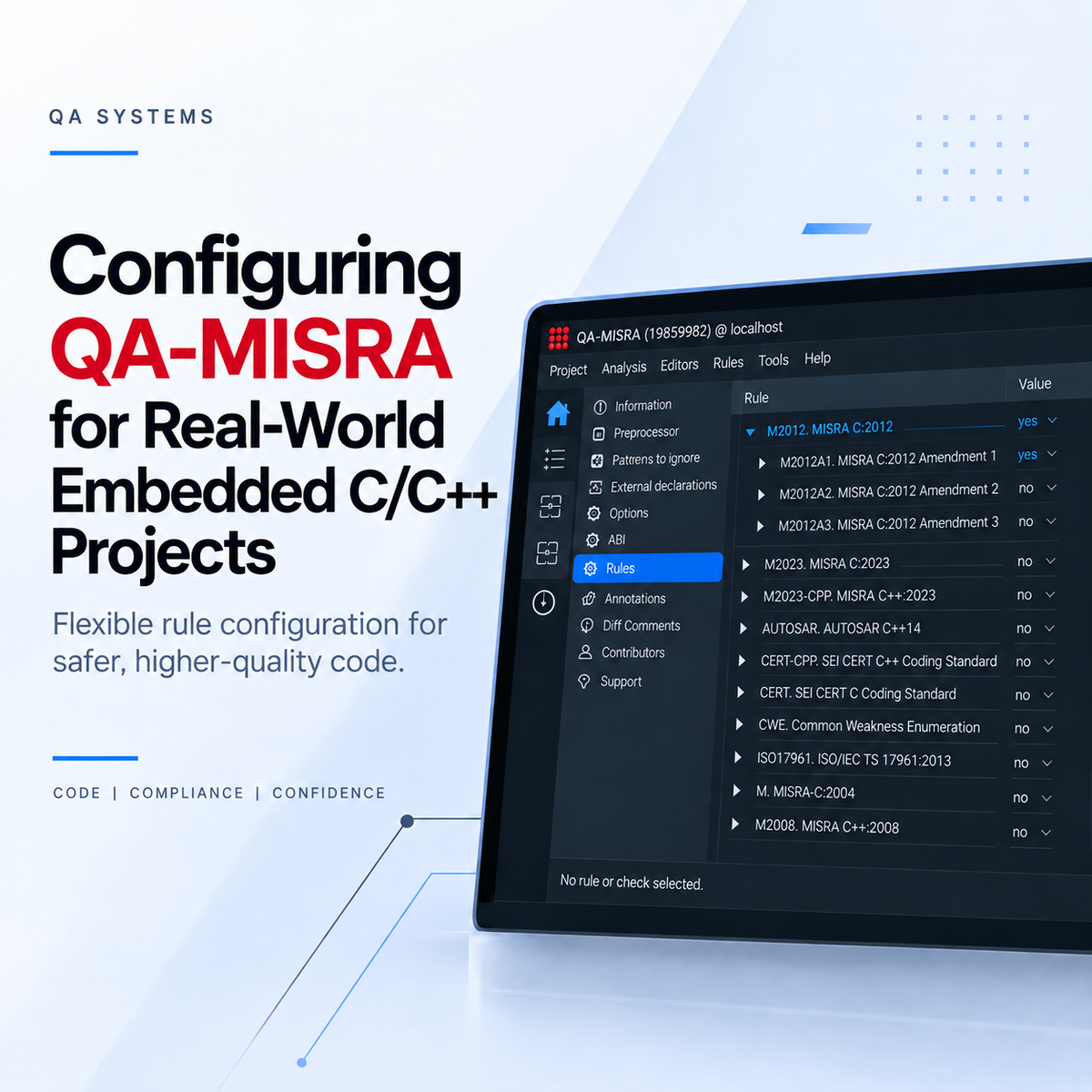
Configuring QA-MISRA for Real-World Embedded C/C++ Projects
Getting QA-MISRA running is only the first part of the setup. For an actual embedded project, you will usually need to decide which coding rules should be checked, how compiler-specific code sho[...]
Read more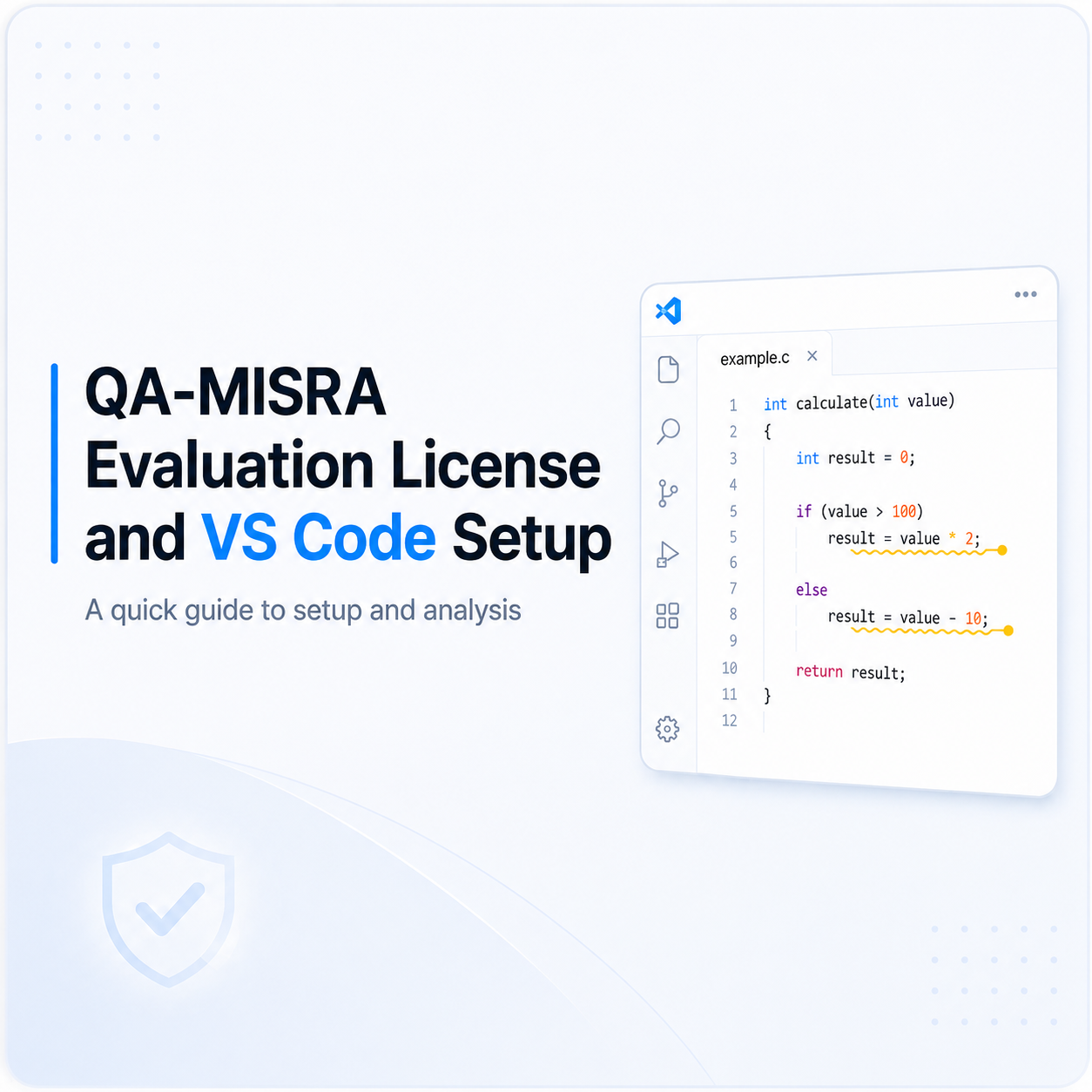
Setting Up a QA-MISRA Evaluation License and VS Code Extension
The following steps explain how to activate a QA-MISRA evaluation license, configure the local server, install the QA-MISRA extension in Visual Studio Code, and run an example analysis. 1. Requ[...]
Read more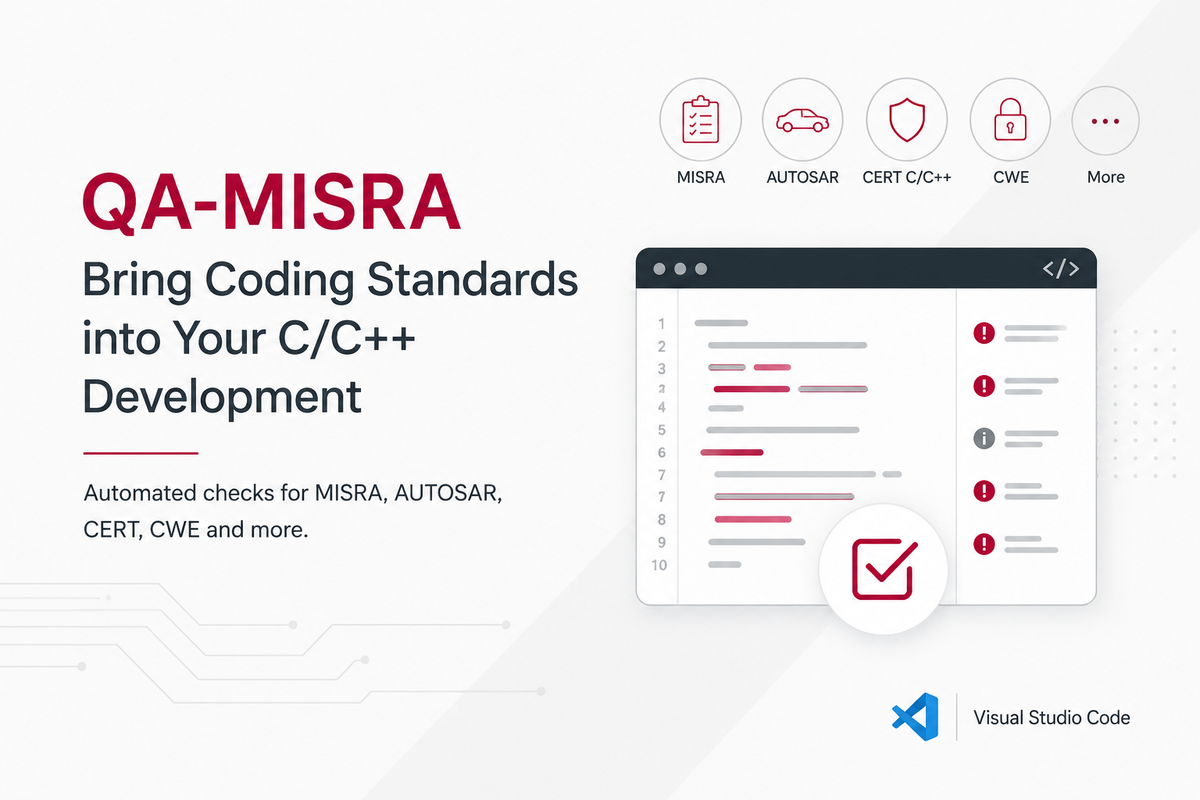
Using QA-MISRA to Bring Coding Standards into C/C++ Development
In embedded and safety-critical software, coding standards help reduce risky language behaviour, improve consistency, and make software easier to review and verify. This is especially important i[...]
Read more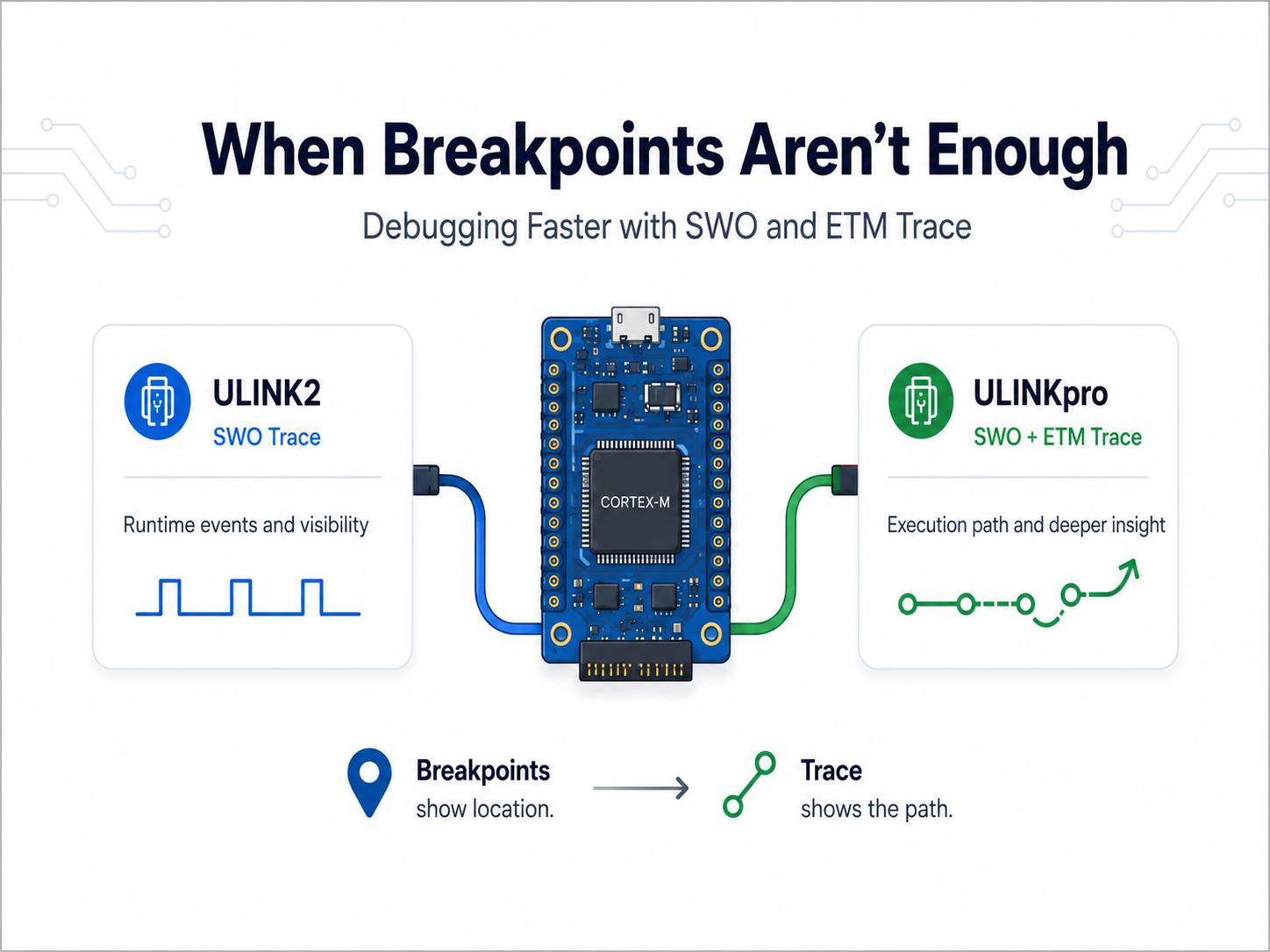
When Breakpoints Aren’t Enough: Debugging Faster with ULINKpro Trace
Most embedded developers are familiar with the usual debugging cycle: set a breakpoint, stop the processor, inspect the problem, make a change, and try again. That works well until the problem [...]
Read more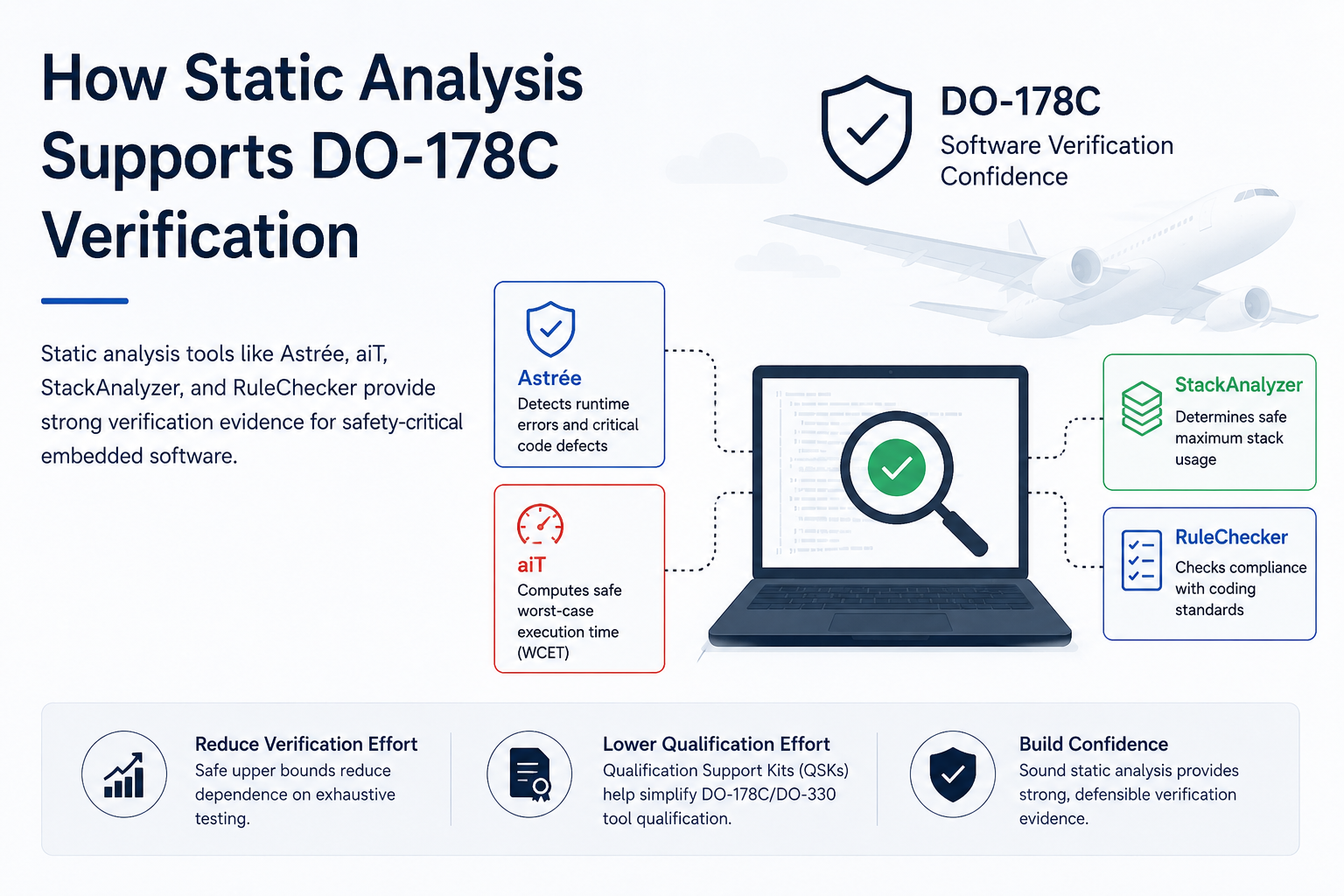
How Static Analysis Supports DO-178C Verification
Developing software for airborne systems requires strong verification evidence, especially for higher-criticality applications. DO-178C defines objectives for airborne software development and ve[...]
Read more
EMBEDDED IS EVERYWHERE

PRODUCTS
Manufacturers
Resource center