

Percepio Detect: Catching Embedded Software Issues Before They Become Failures
Embedded applications can pass unit tests, perform reliably in the lab, and still encounter unexpected failures after hours of operation. Occasional timing problems, stalled RTOS tasks, and intermittent crashes can be difficult to reproduce, making debugging both time-consuming and challenging.
What if developers could capture these issues as they happen, rather than spending hours trying to recreate them?
Continuous Observability with Percepio Detect
Percepio Detect brings Continuous Observability to embedded software testing, automatically monitoring runtime behavior, detecting anomalies, and capturing diagnostic information when issues occur.
Supporting FreeRTOS, Zephyr, and bare-metal applications on Arm Cortex-M devices, Detect helps identify stability problems during extended testing.
It also provides a centralized dashboard where development teams can monitor multiple devices and access reported issues, including firmware versions, fault information, and diagnostic attachments.
Detect can be deployed locally using Docker, allowing organizations to maintain their diagnostic data within their own network without relying on external cloud services.
From Detection to Detailed Diagnostics
When an issue occurs, Detect captures relevant diagnostic information, including execution traces and core dumps.
Developers can investigate crashes through call stacks, function parameters, variables, processor registers, and disassembly, helping identify where the failure occurred and what the system was doing.
Identifying Problems Before They Become Failures
Consider an RTOS task that normally completes within 10 milliseconds but occasionally takes 18 milliseconds under heavier processing loads.
Although the task still meets its 20-millisecond deadline, the reduced timing margin could indicate a potential problem.
Detect's Stopwatch feature measures execution time between defined points and generates alerts when configured thresholds are exceeded.
Similarly, TaskMonitor monitors individual RTOS task CPU utilization, helping identify unexpected activity, stalled tasks, and excessive CPU consumption.
These capabilities can reveal hidden risks before they develop into more serious failures.
Continuous Testing and Integration
Detect supports integration into continuous integration and continuous testing (CI/CT) workflows, enabling automated stability monitoring during extended testing.
Diagnostic data can be collected through serial communication or other supported interfaces and made available through the centralized dashboard.
Developers can then use Percepio Tracealyzer to examine recorded execution traces, analyze task scheduling, and investigate timing or synchronization issues.
With Detect 2026.1 introducing native Zephyr RTOS support and enhanced non-fatal diagnostic capture, Percepio continues to expand its observability capabilities for embedded development teams.
By identifying runtime anomalies and preserving diagnostic evidence, Percepio Detect helps reduce debugging effort and improve embedded software reliability.
To learn more about Percepio Detect and how it can support your embedded software testing, contact Hrutik Champaneri at hrutik.champaneri@joraltechnologies.com.
RELATED NEWS

CompCert: A C Compiler That Comes With a Proof
Safety-critical teams put considerable effort into their C source code. They run static analysis, check MISRA rules, review code, and test the compiled software extensively. However, testing cann[...]
Read more
New target aiT for TriCore now supports 3rd GEN AURIX TC46x. Qualification Support Kits Qualification reports can now be exported as XML. New compiler-specific QSKs: aiT for e200 with Diab [...]
Read more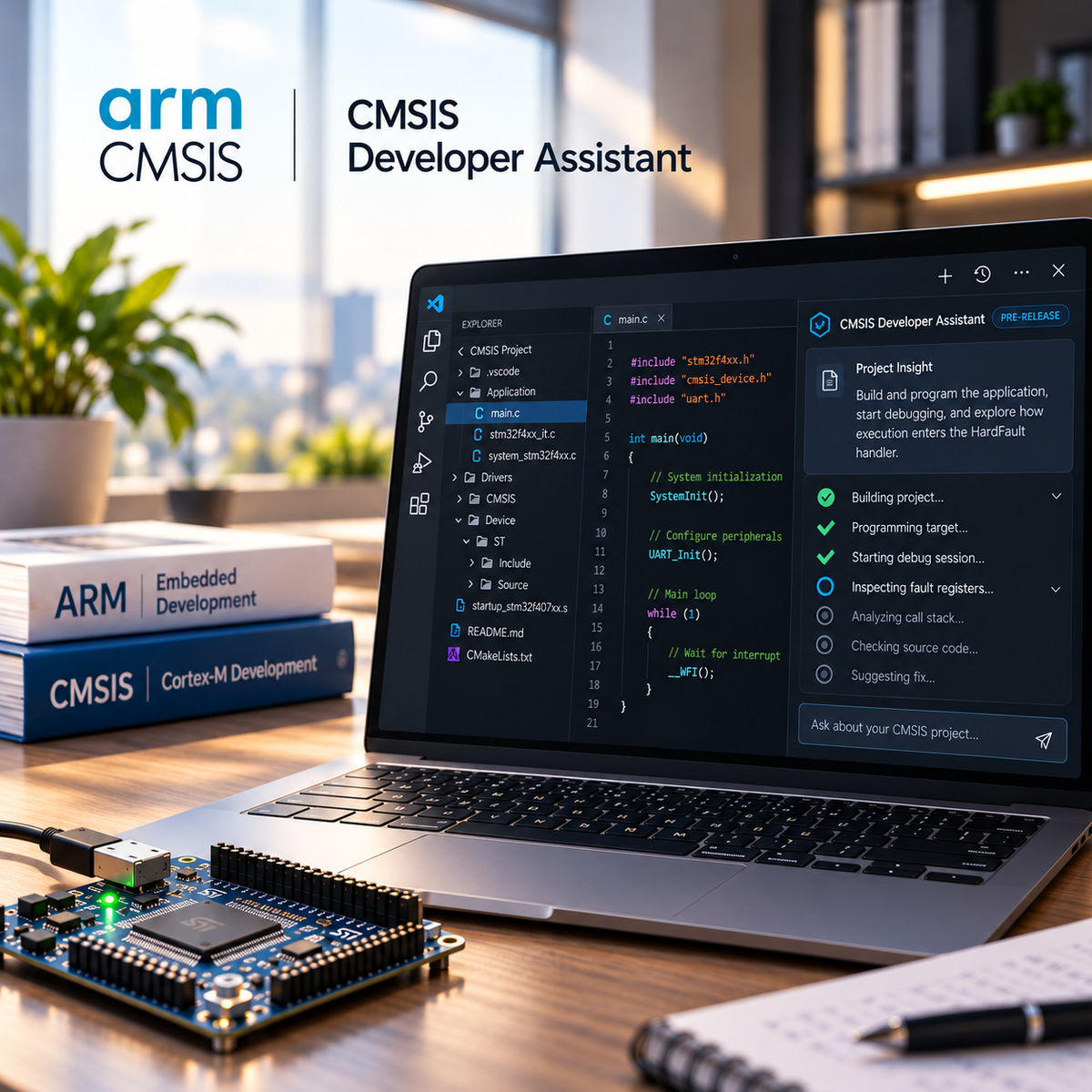
Beyond Code Generation: AI-Assisted Embedded Development with Arm CMSIS
AI coding assistants can generate a UART driver in seconds. But when the output is garbled or an application unexpectedly enters a HardFault handler, the problem may not be obvious from the sourc[...]
Read more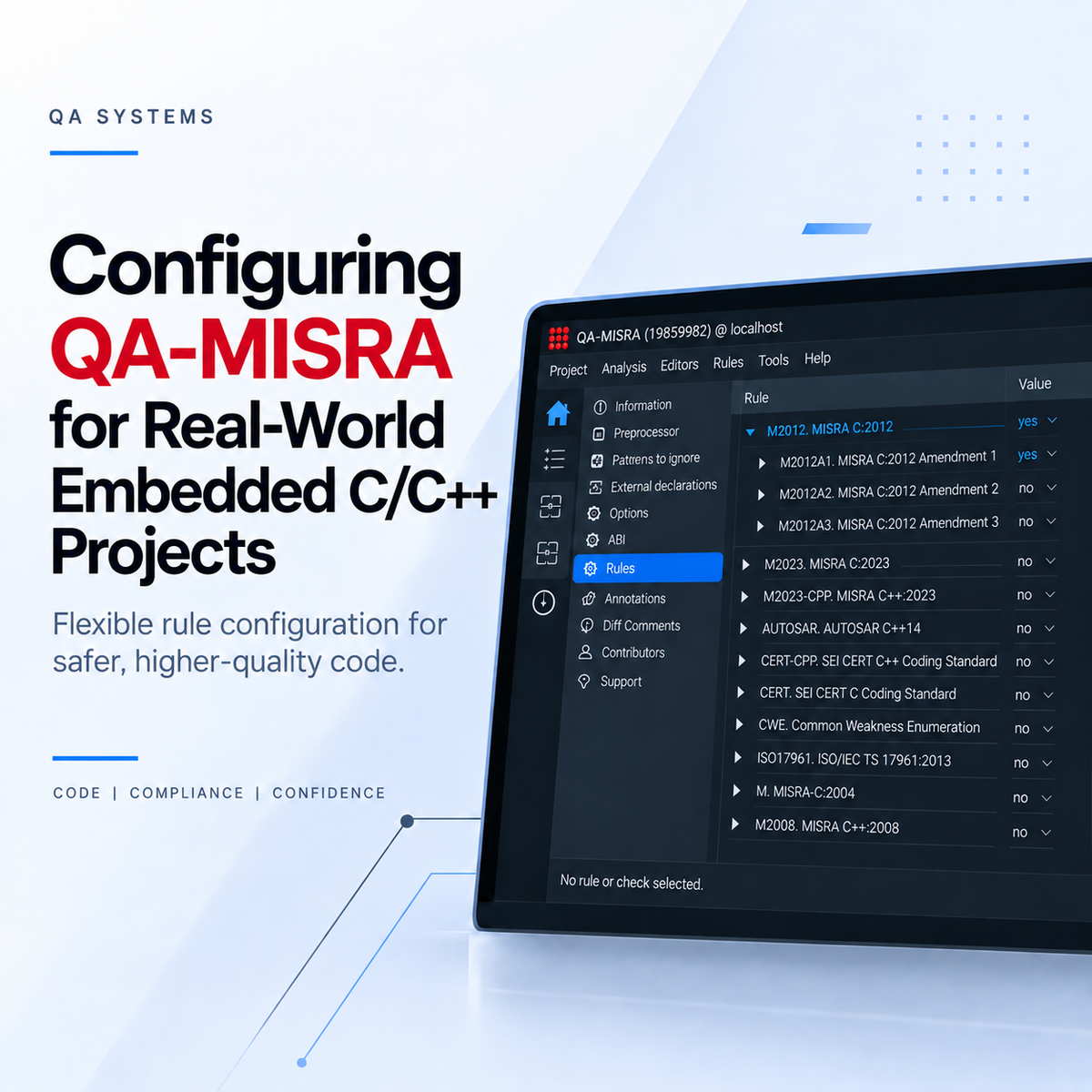
Configuring QA-MISRA for Real-World Embedded C/C++ Projects
Getting QA-MISRA running is only the first part of the setup. For an actual embedded project, you will usually need to decide which coding rules should be checked, how compiler-specific code sho[...]
Read more
Setting Up a QA-MISRA Evaluation License and VS Code Extension
The following steps explain how to activate a QA-MISRA evaluation license, configure the local server, install the QA-MISRA extension in Visual Studio Code, and run an example analysis. 1. Requ[...]
Read more
EMBEDDED IS EVERYWHERE

PRODUCTS
Manufacturers
Resource center