

Canata 26.01 AI-Assisted Test Generation for Cantata
We hope you have had a good start to the new year!
As promised, we are delighted to announce the release of Cantata 26.01, featuring the innovative AI-Assisted Test Generation and a new Visual Studio Code Extension
Cantata 26.01 now available
AI-Assisted Test Generation for Cantata
Cantata 26.01 introduces the Cantata Test Automation Skill: a new integration that brings AI-assisted test generation into your Cantata workflow. By combining Cantata's proven testing framework with the capabilities of Claude Code (Anthropic's agentic coding tool), this skill enables developers to generate unit tests for C/C++ source code using natural language commands.
Visual Studio Code Extension
The new VS Code extension in Cantata 26.01 allows the creation of Cantata test scripts directly within the IDE, featuring a fresh new user interface and extensive configurability. To create a new test script, developers start by opening the test script configuration view. Within this interface, they can select the source files to be tested, define the script name, and configure other basic settings from the main configuration tab. Additional tabs provide more detailed controls, such as options for stubs and wrappers, while advanced customization is available through the extension settings for even greater control over the test script.
Check out our demo videos on the new features
Further technical details can be found here:
Technical Note - Integration with Claude Code
Cantata 26.01 Release Notes
RELATED NEWS
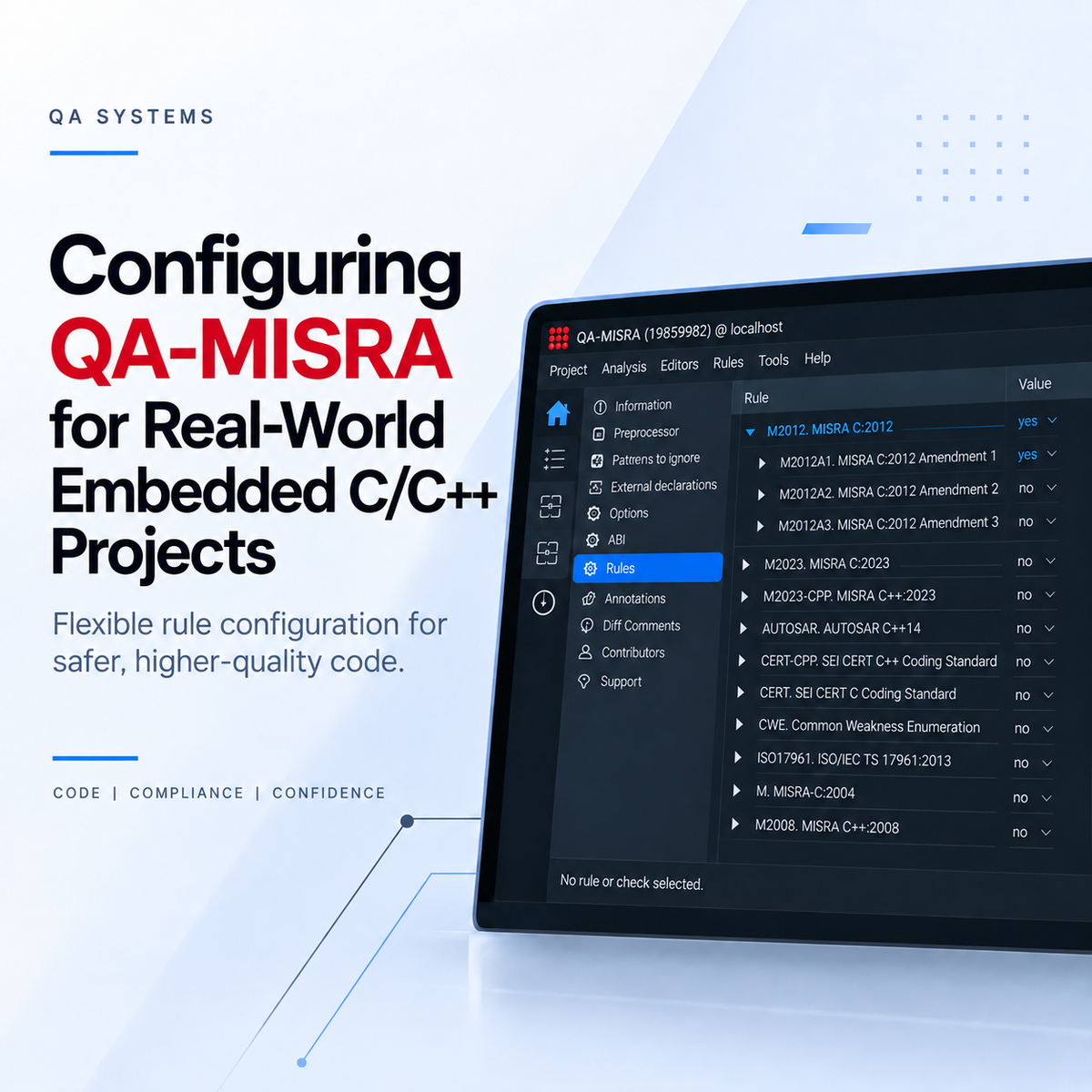
Configuring QA-MISRA for Real-World Embedded C/C++ Projects
Once QA-MISRA has been set up for a C or C++ project, the next step is adapting the analysis to the requirements of the development team. Different projects may follow different coding standard[...]
Read more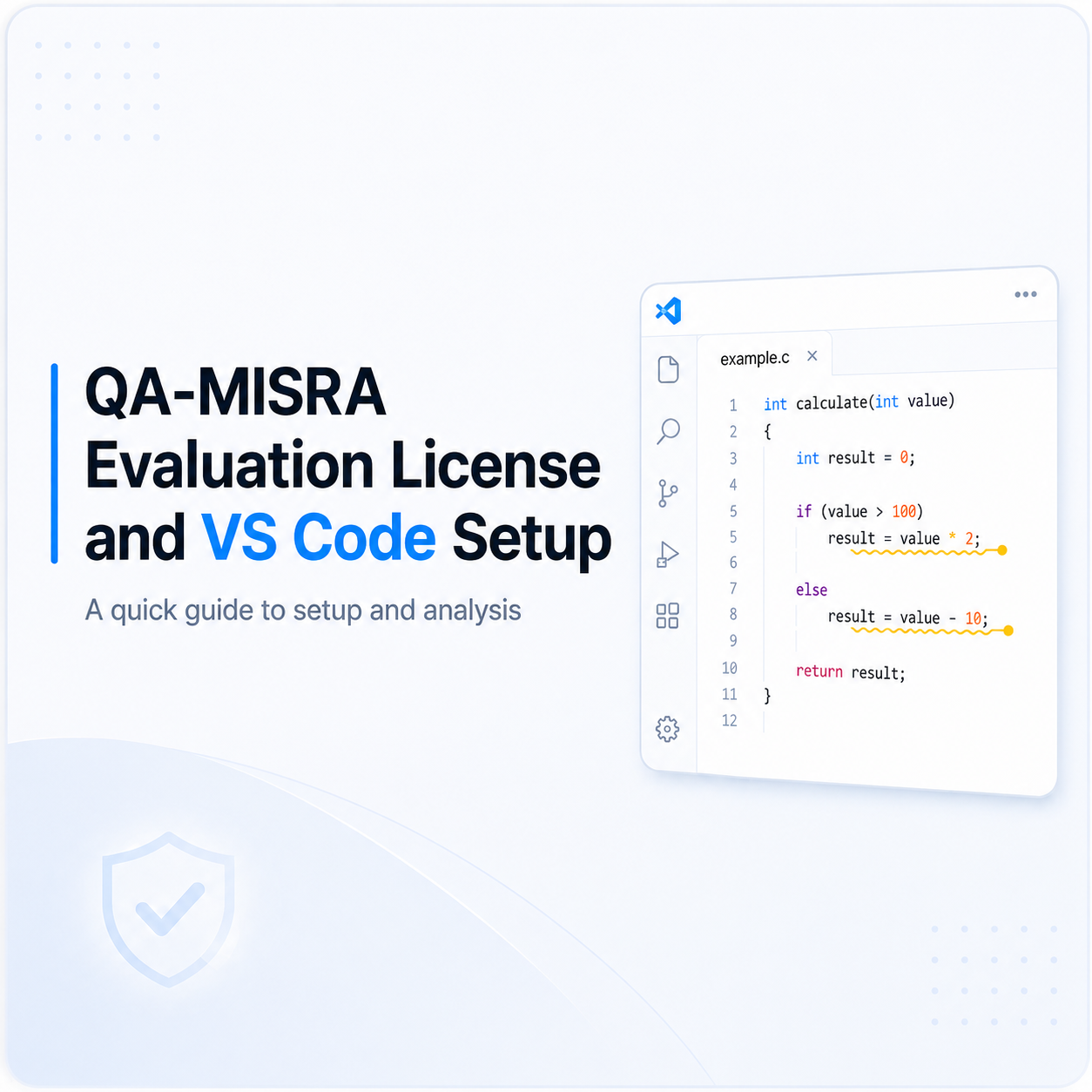
Setting Up a QA-MISRA Evaluation License and VS Code Extension
The following steps explain how to activate a QA-MISRA evaluation license, configure the local server, install the QA-MISRA extension in Visual Studio Code, and run an example analysis. 1. Requ[...]
Read more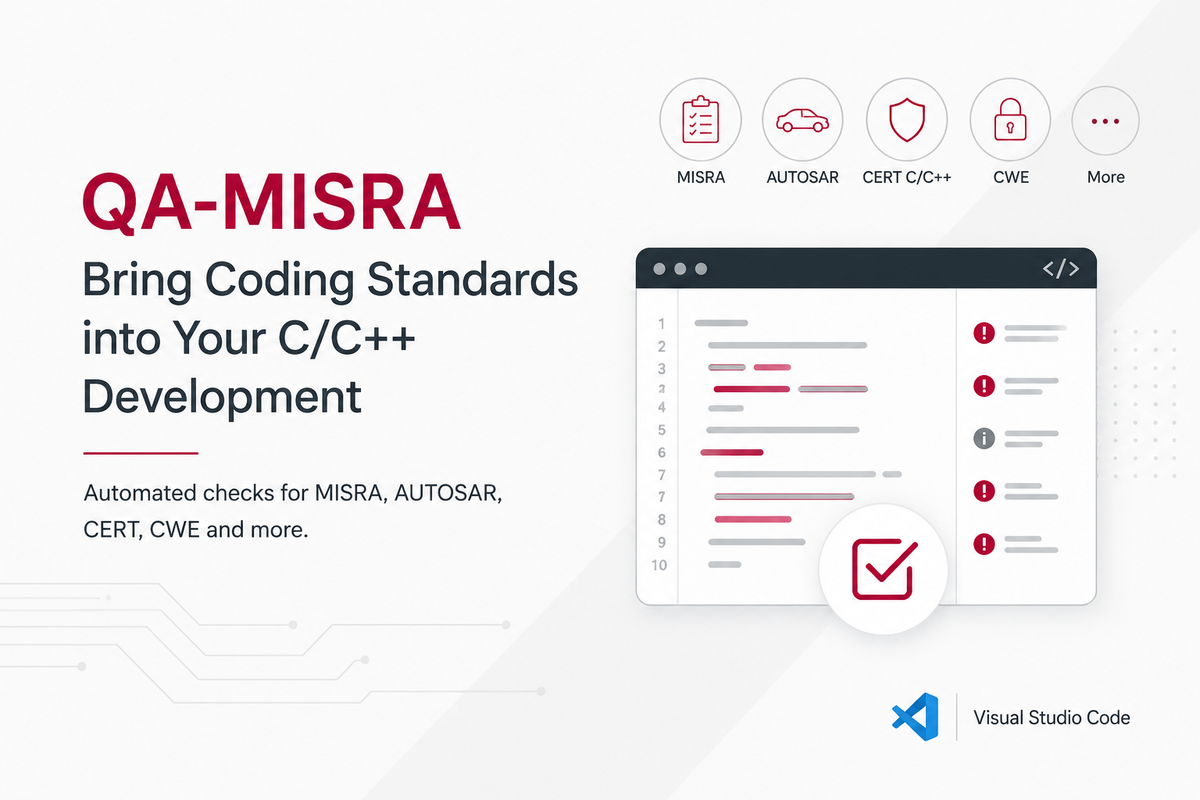
Using QA-MISRA to Bring Coding Standards into C/C++ Development
In embedded and safety-critical software, coding standards help reduce risky language behaviour, improve consistency, and make software easier to review and verify. This is especially important i[...]
Read more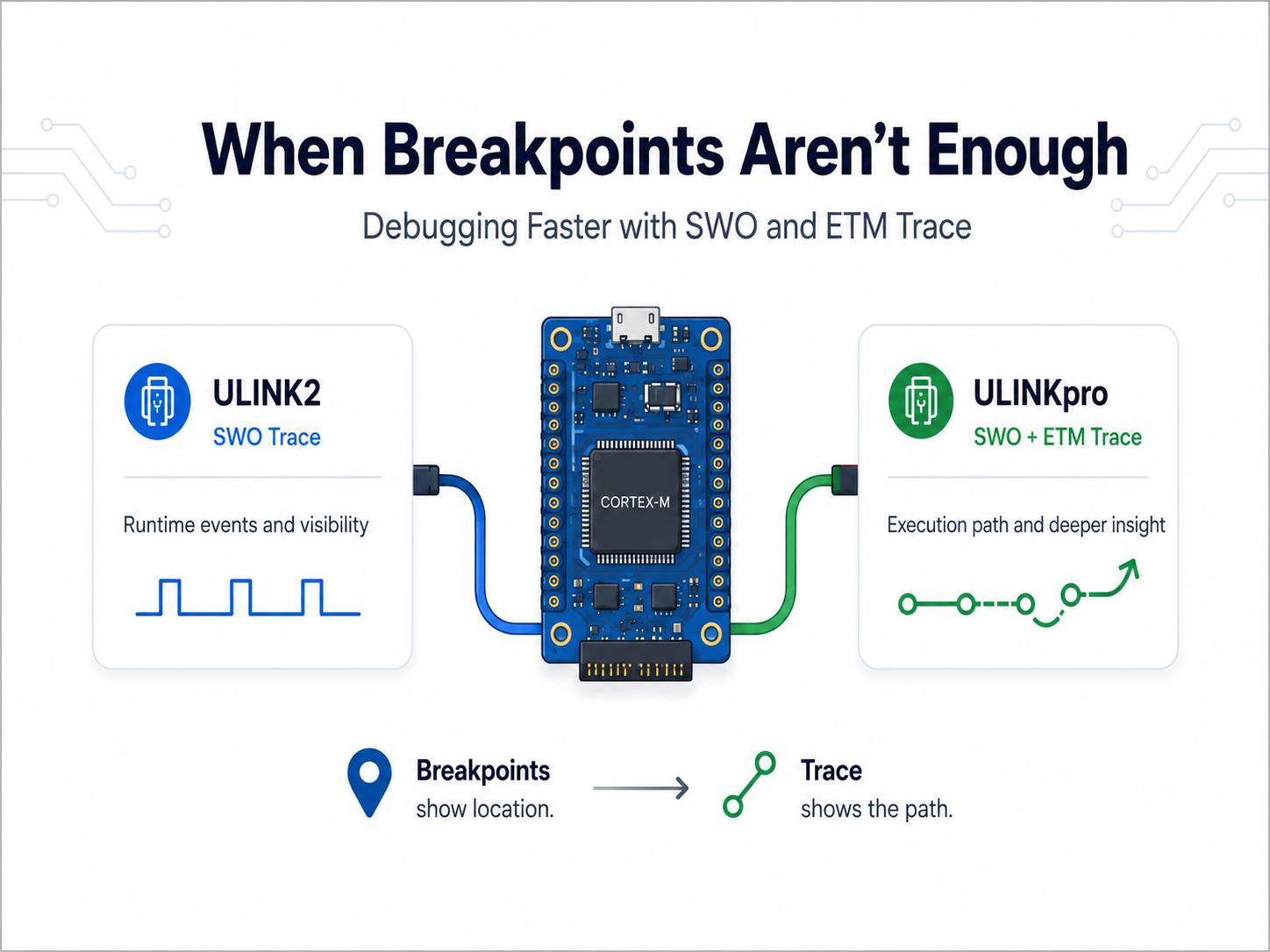
When Breakpoints Aren’t Enough: Debugging Faster with ULINKpro Trace
Most embedded developers are familiar with the usual debugging cycle: set a breakpoint, stop the processor, inspect the problem, make a change, and try again. That works well until the problem [...]
Read more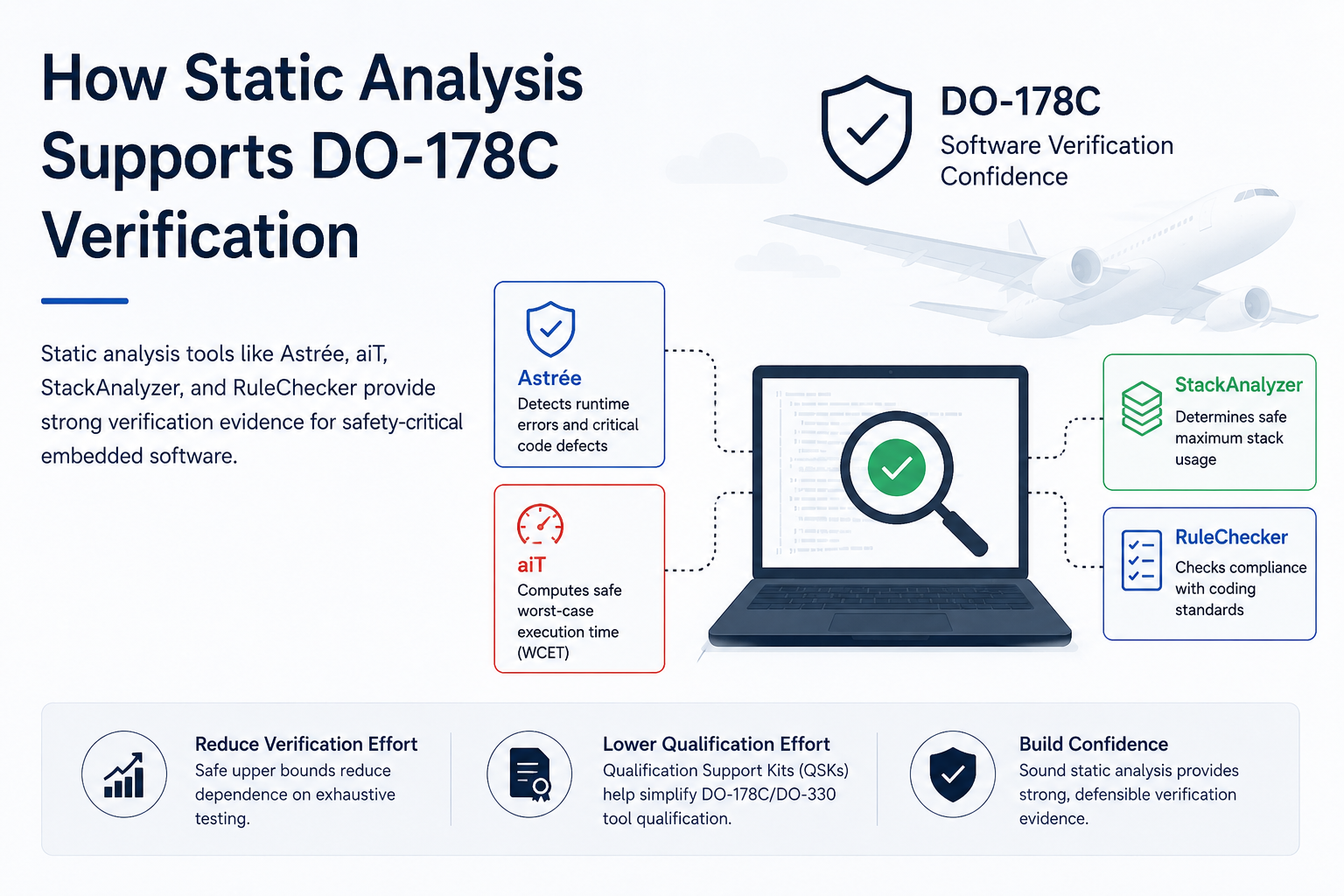
How Static Analysis Supports DO-178C Verification
Developing software for airborne systems requires strong verification evidence, especially for higher-criticality applications. DO-178C defines objectives for airborne software development and ve[...]
Read more
EMBEDDED IS EVERYWHERE

PRODUCTS
Manufacturers
Resource center