
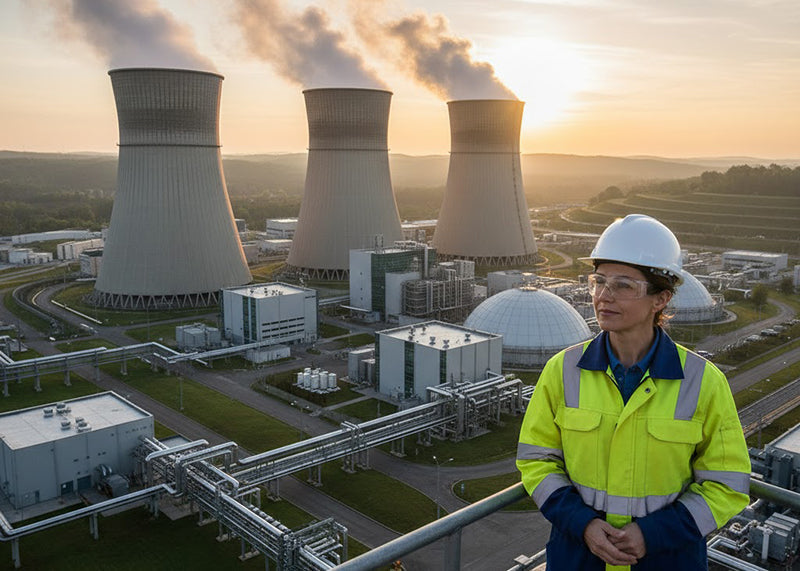
Powering the Future: IEC 60880 Compliance in Nuclear Systems and Software Safety
Powering the Future: IEC 60880 Compliance in Nuclear Systems and Software Safety
Why the Nuclear Industry Can’t Afford Software Mistakes
In Nuclear Software, Trust Is Measured in Verification
In the control room of a nuclear plant, quiet confidence is built not on chance but on evidence. Every signal monitored and every line of code executed has a direct link to safety, reliability, and public trust.
For decades, the nuclear and energy sectors have operated under one unwavering principle: there can be no margin for error.
Today, however, software, not steel, has become the true guardian of this principle. Reactors, turbines, and redundant control systems all rely on millions of lines of embedded C and C++ code, each of which is a potential point of failure. As regulations tighten and scrutiny deepens, the question is no longer “Can we automate this system?” but “How can we prove that it’s safe?”
That’s where engineered assurance tools like Cantata and QA-MISRA step in, bridging the gap between complex software design and demonstrable functional safety compliance in nuclear systems.
Testing What Matters Most with Cantata
Cantata does more than test code, it tests integrity.
Purpose-built for unit and integration testing of embedded C and C++ software, Cantata automates test generation and execution directly at the source level. Each function, decision, and safety path can be verified against its expected behaviour, helping engineers satisfy IEC 60880, IEC 61508, and ISO 26262 standards.
Instead of treating testing as a late-stage hurdle, QA Systems empowers teams to embed verification within the development workflow. When a Cantata test passes, it validates not only the code but also the safety case behind it.
Key capabilities:
- Automated unit and integration test generation
- Rigorous code coverage analysis (statement, branch, MC/DC)
- Full requirements traceability and auditable reporting
- Independent TÜV certification for use in nuclear-grade applications

From Compliance in Nuclear Systems to Confidence with QA-MISRA
Compliance is non-negotiable in safety-classified software. Beyond functional correctness, every line of code must behave predictably under all conditions.
QA-MISRA enforces MISRA C, MISRA C++, AUTOSAR C++14, and CERT C/C++ standards through automated static analysis, ensuring that unsafe constructs are detected and eliminated long before execution.
Key advantages:
- Rapid static analysis across MISRA, AUTOSAR, CERT, and CWE rulesets
- Near-zero false positives for syntactic rules
- Certified by SGS TÜV for use in IEC 60880 environments
- Detailed compliance reports, metrics, and visualisations
- Seamless integration into Eclipse IDE and modern CI/CD pipelines
With QA-MISRA, software quality becomes measurable, traceable, and certifiable — the foundation of safety-critical integrity.
A Unified Workflow for Functional Safety
By combining QA-MISRA (for static analysis and coding-standard compliance) with Cantata (for dynamic testing and code coverage), engineering teams deliver a unified verification workflow that links coding-standard enforcement with automated test validation for full traceability, moving from reactive testing to proactive software assurance, where safety and reliability are built into design, not added at the end.
Specific Support for IEC 60880 Certification
The IEC 60880 standard defines the functional safety requirements for software used in nuclear power-plant instrumentation and control systems. QA Systems’ tools provide certification-ready support tailored to these requirements.
Dedicated IEC 60880 toolkits include:
- Qualification and certification evidence kits for both Cantata and QA-MISRA
- Automated test suites and documentation for audit support
- Sequential verification flow: static analysis first (QA-MISRA), then dynamic testing (Cantata)
- Direct integration into safety lifecycle processes
Both tools are independently certified and designed for the highest Safety Integrity Levels (SILs) demanded by nuclear and high-energy systems.
A Future Built on Proven Integrity
As new-generation reactors, small modular systems, and hydrogen-based power emerge, the software controlling them must evolve, but never at the expense of safety.
QA Systems provides a verified foundation of trust, giving regulators verifiable evidence, engineers confidence to innovate, and the public assurance that the systems powering their world are as safe as they are sophisticated.
In a domain where milliseconds and microcodes separate stability from catastrophe, QA Systems ensures that trust is not a promise, it’s verified, certified, and proven line by line.
For more information about QA-MISRA and Cantata, visit qa-systems.com.
Author: Dylan Llewellyn
© 2025 QA Systems. Published by JORAL Technologies.
RELATED NEWS
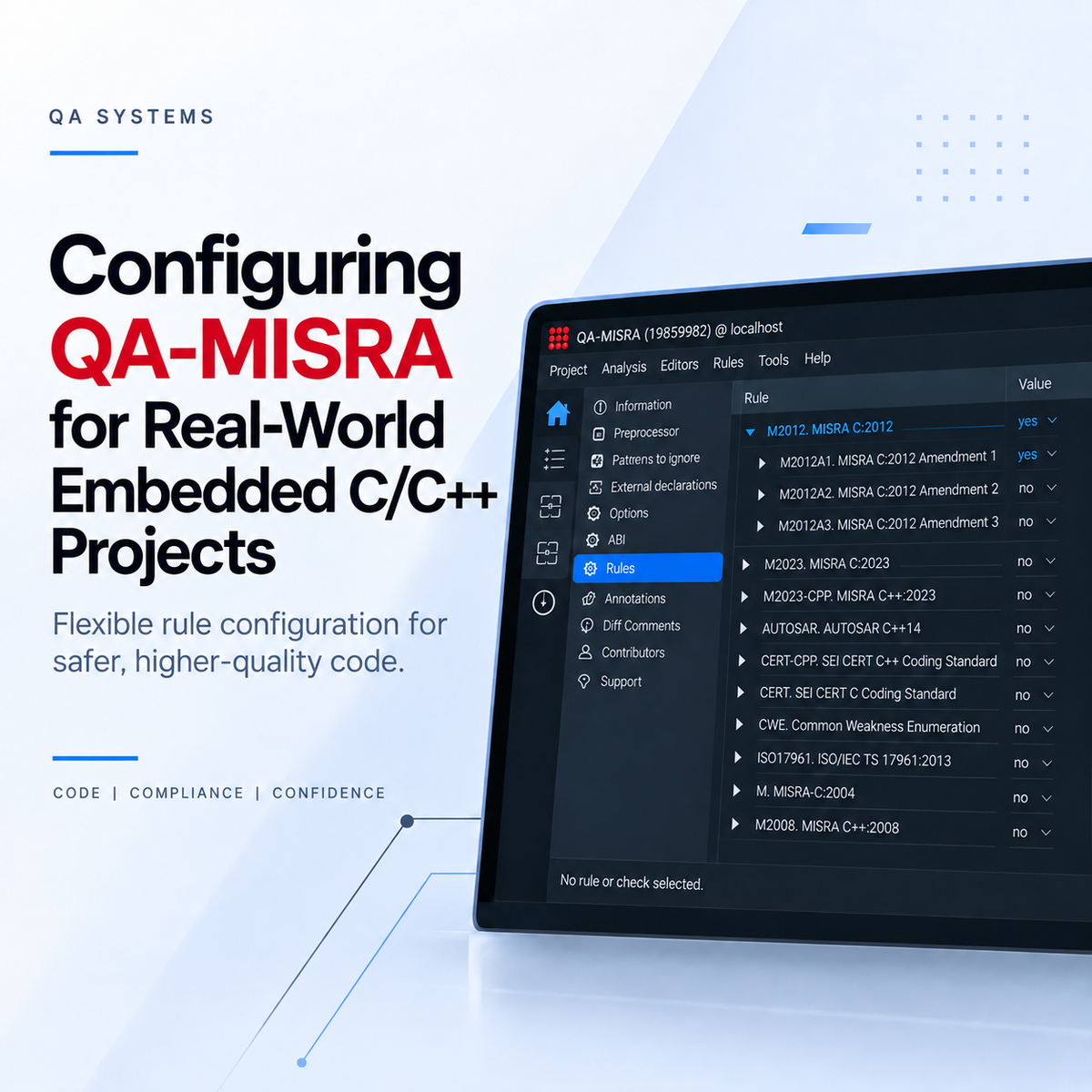
Configuring QA-MISRA for Real-World Embedded C/C++ Projects
Once QA-MISRA has been set up for a C or C++ project, the next step is adapting the analysis to the requirements of the development team. Different projects may follow different coding standard[...]
Read more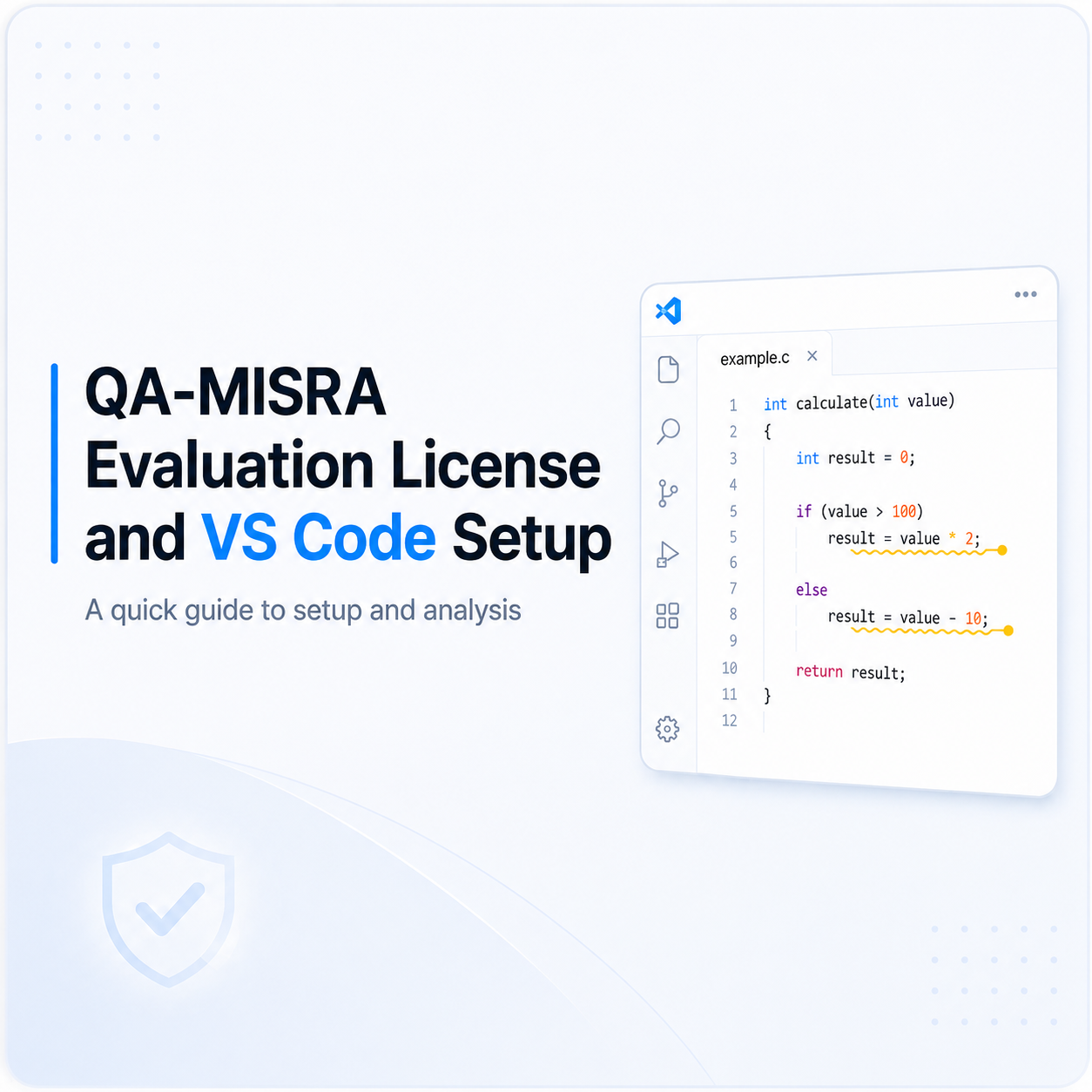
Setting Up a QA-MISRA Evaluation License and VS Code Extension
The following steps explain how to activate a QA-MISRA evaluation license, configure the local server, install the QA-MISRA extension in Visual Studio Code, and run an example analysis. 1. Requ[...]
Read more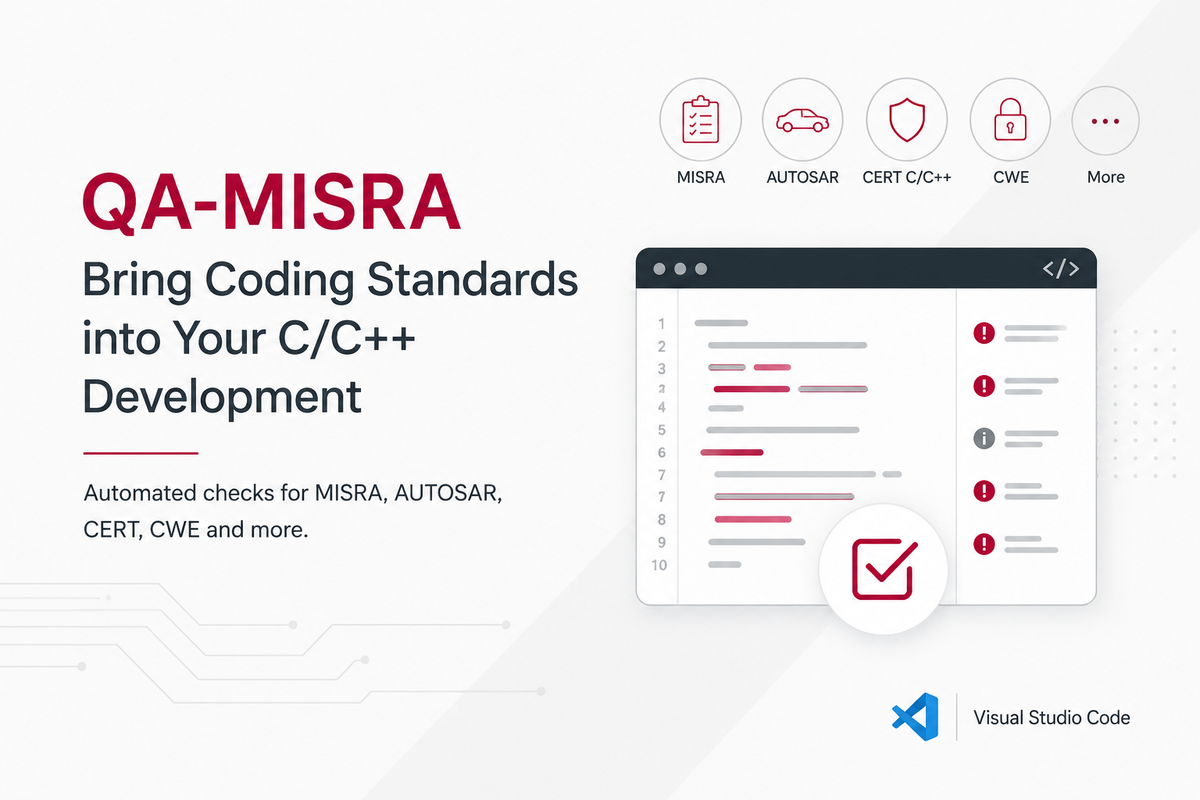
Using QA-MISRA to Bring Coding Standards into C/C++ Development
In embedded and safety-critical software, coding standards help reduce risky language behaviour, improve consistency, and make software easier to review and verify. This is especially important i[...]
Read more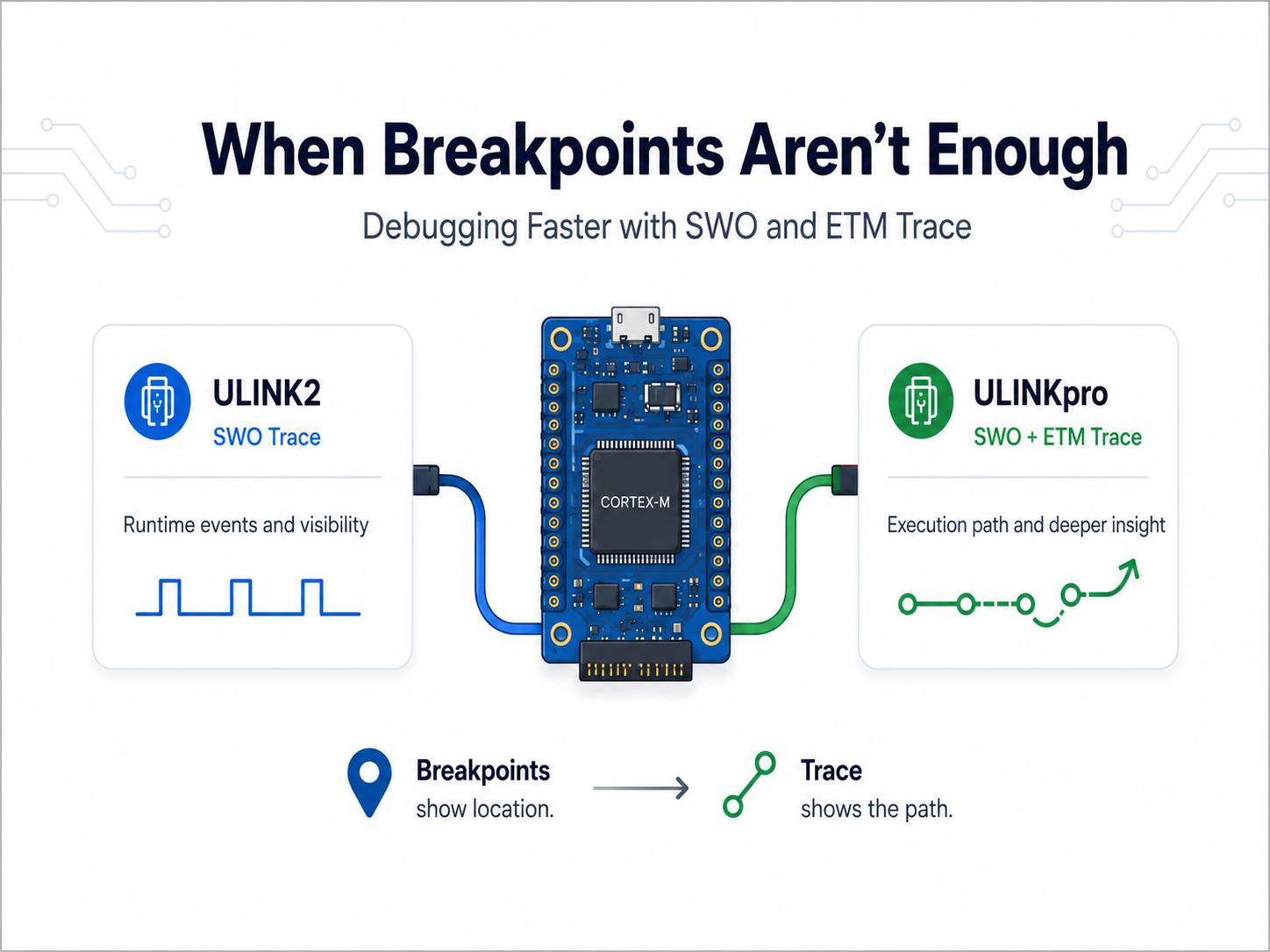
When Breakpoints Aren’t Enough: Debugging Faster with ULINKpro Trace
Most embedded developers are familiar with the usual debugging cycle: set a breakpoint, stop the processor, inspect the problem, make a change, and try again. That works well until the problem [...]
Read more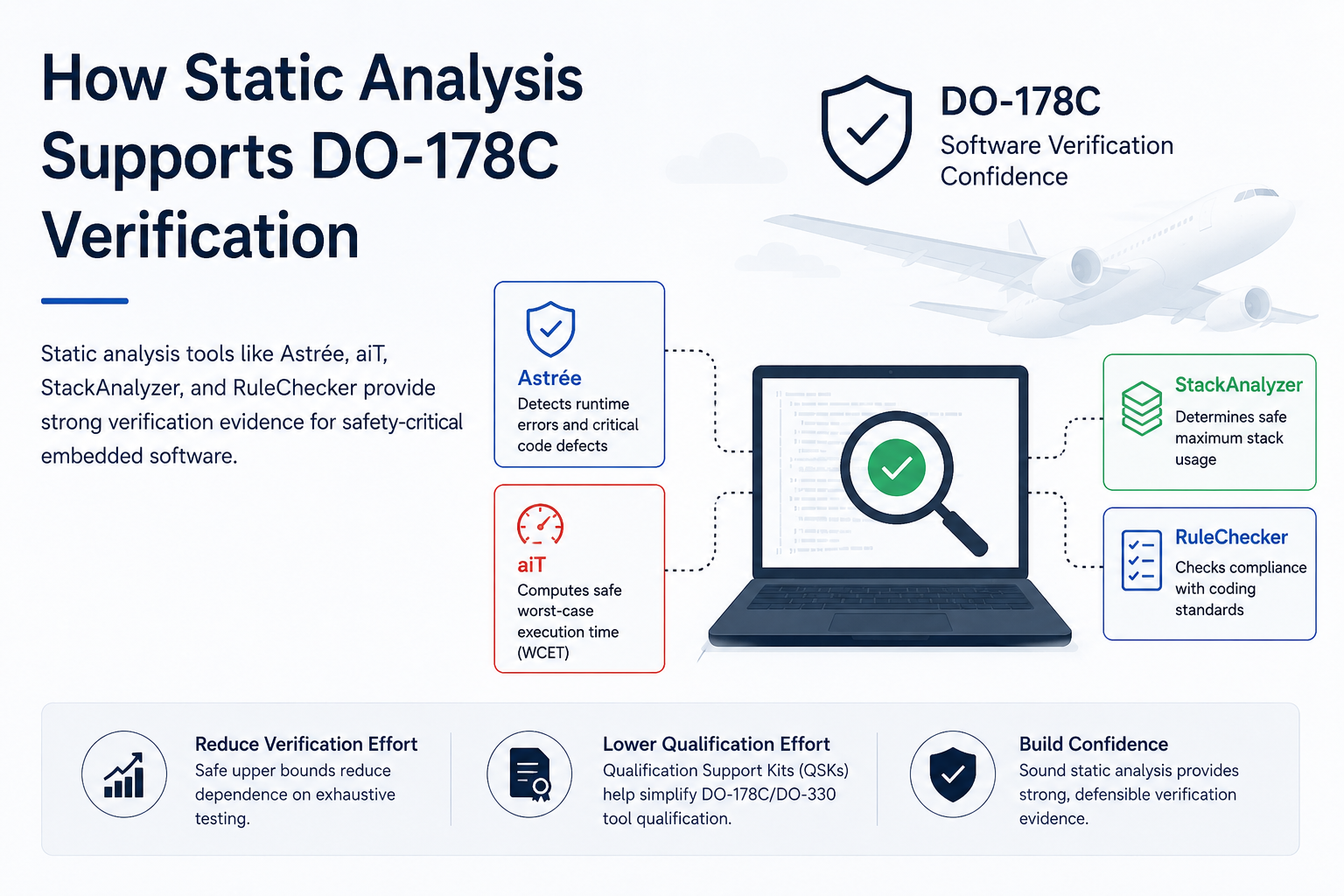
How Static Analysis Supports DO-178C Verification
Developing software for airborne systems requires strong verification evidence, especially for higher-criticality applications. DO-178C defines objectives for airborne software development and ve[...]
Read more
EMBEDDED IS EVERYWHERE

PRODUCTS
Manufacturers
Resource center