

Release 25.10 of AbsInt Tools for Safety-Critical Software Development
All Products
===============
- The AbsInt Linux tools require now RHEL 9 or compatible and ship a Dockerfile creating a compatible
Rocky Linux 9 container to facilitate deployment in containerized environments.
aiT, TimingProfiler, StackAnalyzer, TimeWeaver
==================================================
- NEW: aiT for TI TMS320F28386D/4D/8D
- NEW: aiT for ATSAME51J18/19/20A
- NEW: aiT for TMS570LC4357 rev B
- Improved Project/Workspace Diff-Viewer, Sections View, and Symbols View
- Enhanced analysis setup capabilities enable users to create new analysis projects more efficiently
Astrée, RuleChecker
======================
- NEW: Delta analysis displays summary of differences between project revisions by tables and charts, and classifies alarms as new/old.
- NEW: Astrée supports sound analysis of bounded recursions
- Enhanced safety manual by DO-356A and ISO 21434 verification goal coverage
- Enhanced VS-Code plugin (LSP server) by "single translation unit" mode, enabling faster rule checking
- Improved rule coverage of CERT C/C++ and CWE
CompCert
============
- NEW: CompCert for TriCore (1.6.x)
- Improved optimizations for arithmetic runtime library functions
- Generation of position-independent executables (PIE) and position-independent code (PIC) for AArch64, RISC-V and x86-64
Plugins
=========
- AbsInt toolbox for TargetLink supports "diff" mode as default alarm comment mode.
A complete list of all new features and improvements can be found here.
You may watch a demonstration of selected new features on the AbsInt YouTube Channel.
RELATED NEWS
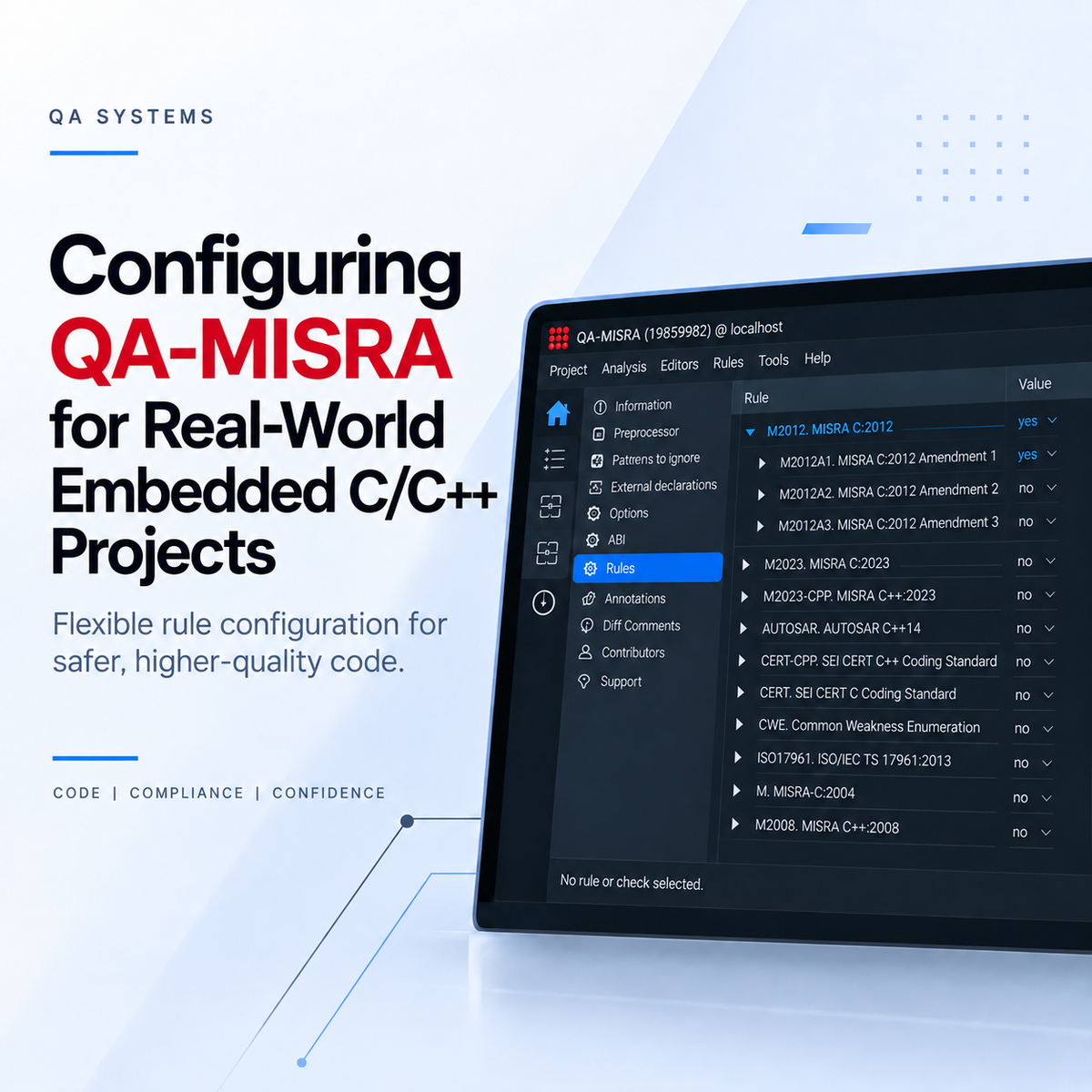
Configuring QA-MISRA for Real-World Embedded C/C++ Projects
Once QA-MISRA has been set up for a C or C++ project, the next step is adapting the analysis to the requirements of the development team. Different projects may follow different coding standard[...]
Read more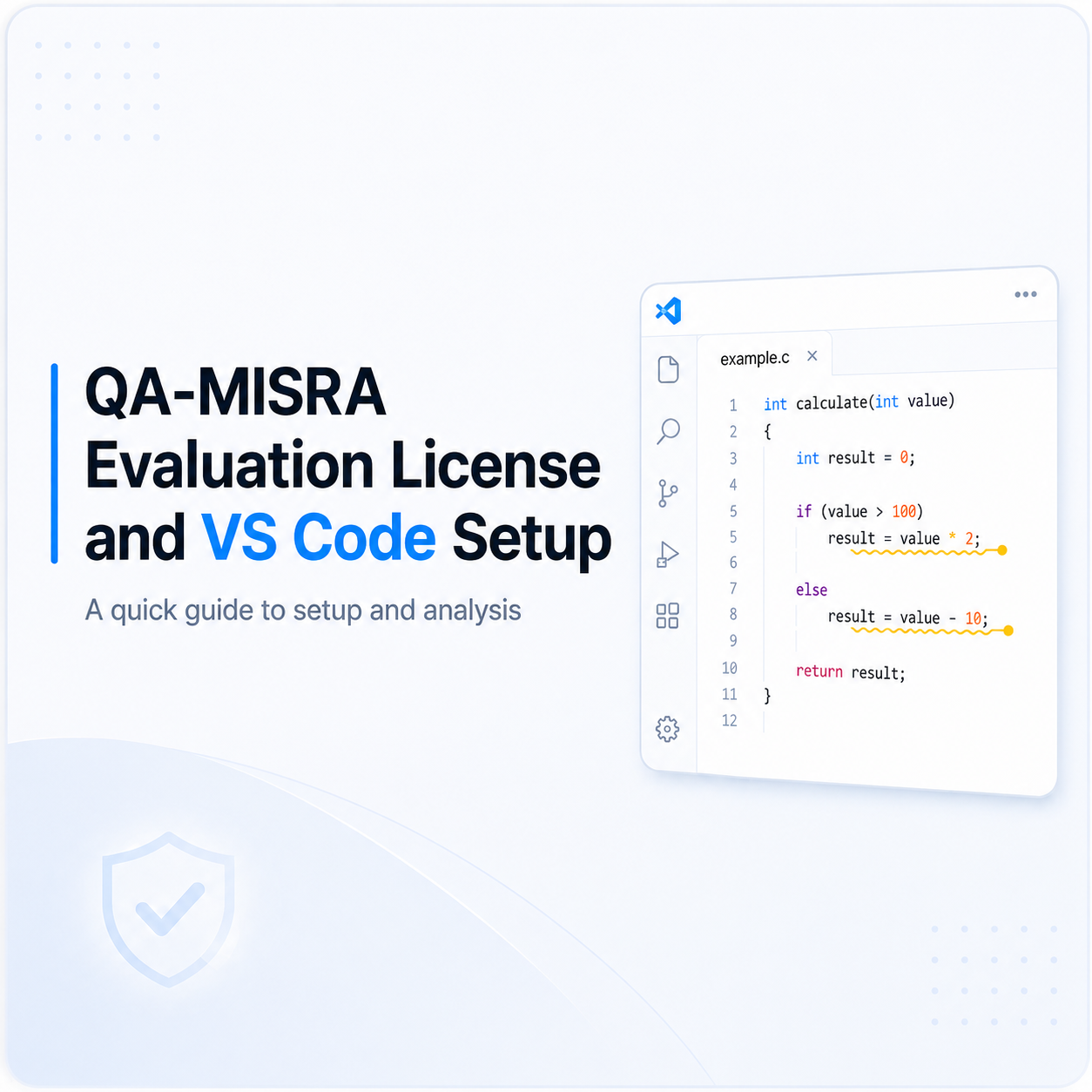
Setting Up a QA-MISRA Evaluation License and VS Code Extension
The following steps explain how to activate a QA-MISRA evaluation license, configure the local server, install the QA-MISRA extension in Visual Studio Code, and run an example analysis. 1. Requ[...]
Read more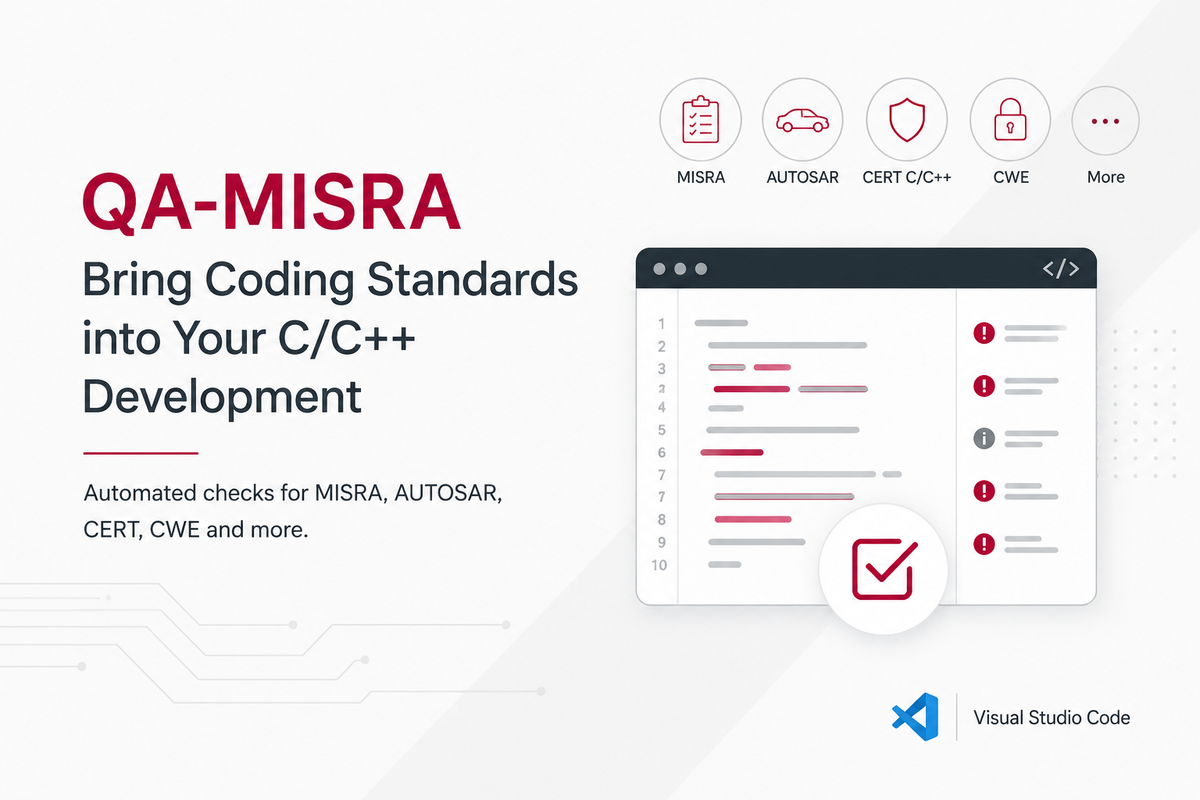
Using QA-MISRA to Bring Coding Standards into C/C++ Development
In embedded and safety-critical software, coding standards help reduce risky language behaviour, improve consistency, and make software easier to review and verify. This is especially important i[...]
Read more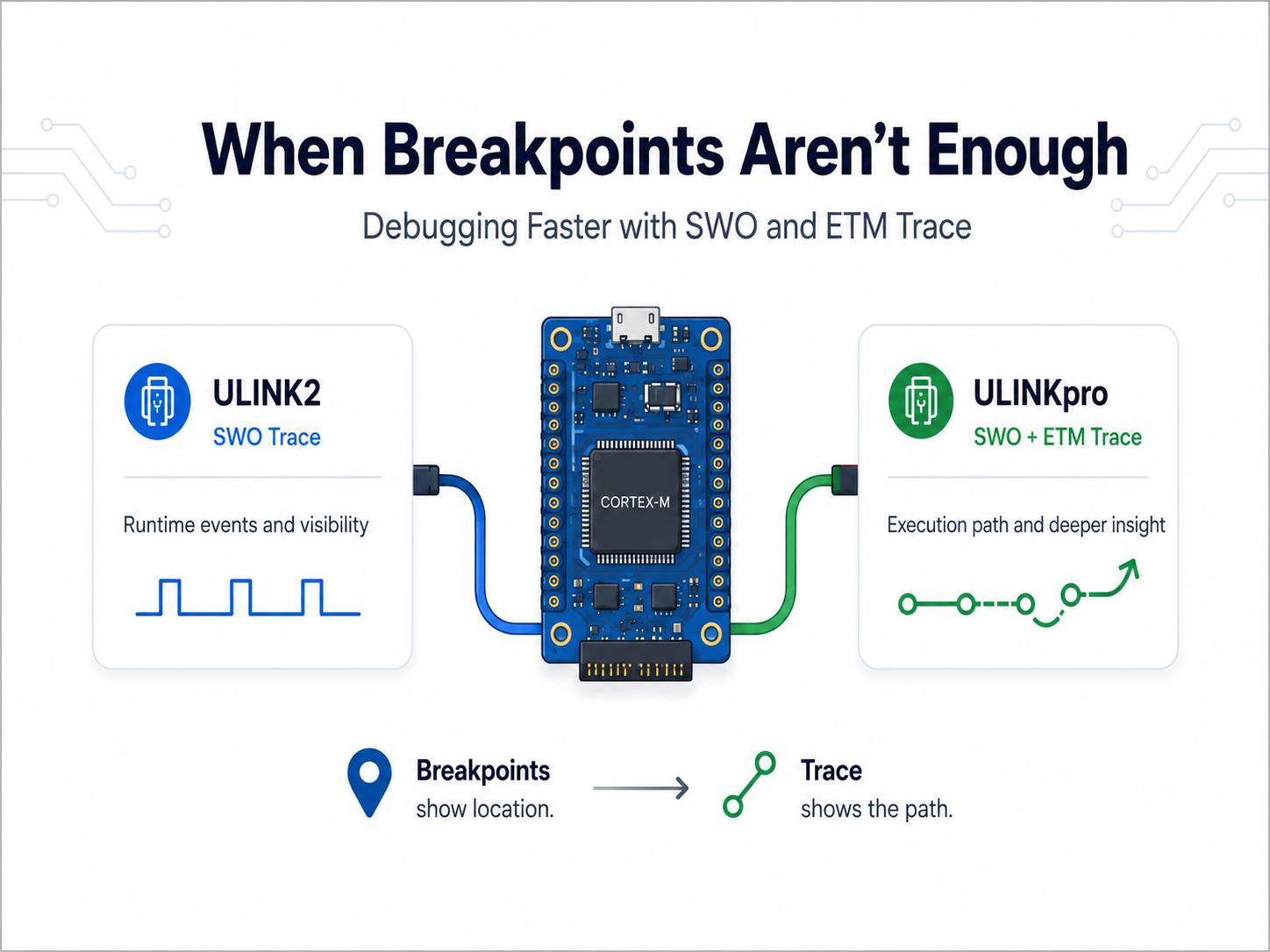
When Breakpoints Aren’t Enough: Debugging Faster with ULINKpro Trace
Most embedded developers are familiar with the usual debugging cycle: set a breakpoint, stop the processor, inspect the problem, make a change, and try again. That works well until the problem [...]
Read more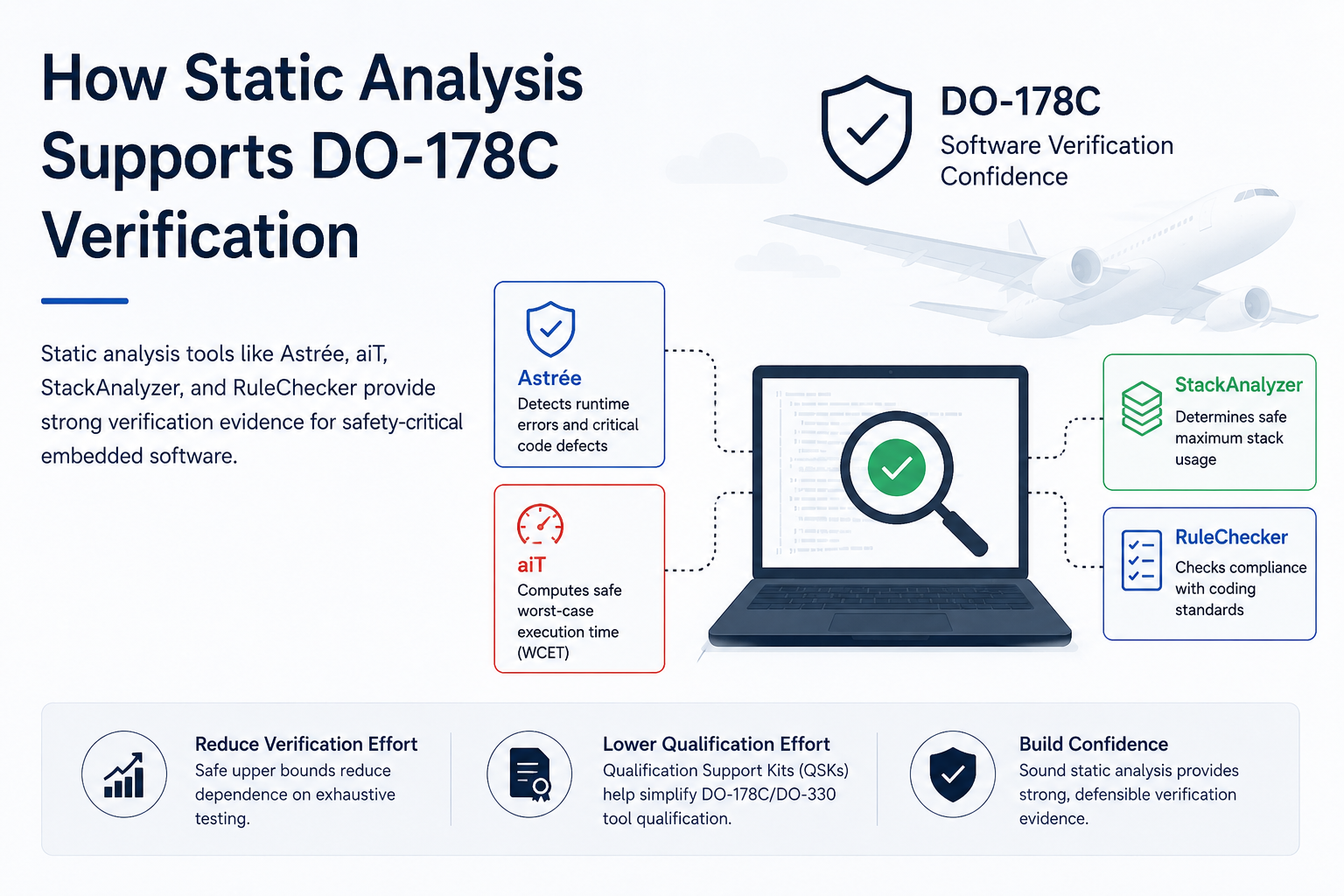
How Static Analysis Supports DO-178C Verification
Developing software for airborne systems requires strong verification evidence, especially for higher-criticality applications. DO-178C defines objectives for airborne software development and ve[...]
Read more
EMBEDDED IS EVERYWHERE

PRODUCTS
Manufacturers
Resource center